And Justice for All…

The morning sun streams through twelve-foot windows and spills across the desks of Room 204.  The children stand and face the flag, hand over heart,   “I pledge allegiance…” Early in the year, scraping chairs, shuffling feet, and muffled whispers make it clear that these words are more hollow than hallowed.

Are these words we can say with conviction?  One of the true privileges of teaching eight year-olds is that I stand watch as they cross the threshold from literal-mindedness into critical and abstract thinking.

“I pledge allegiance to the flag of the United States of America…”

Children slowly learn that we don’t pledge our allegiance to the red, white, and blue fabric that hangs in the room.   We pledge allegiance to the ideals that have been taught and fought for over time… ideals that the American flag has come to represent.

We explore those ideals through literature and connect them to the family stories of the children in our class.  These stories make up the story of our country.  Our ancestors are Russian Jews who came to this country to flee religious persecution; or Africans who were captured, enslaved, and brought here against their will and then risked their lives for freedom.  Our ancestors fled famine and misfortune; dictatorships and disaster.  Our ancestors sought opportunity and fought for equal rights.  They refused to let their hearts be chained and worked hard until the hearts of others were changed.  This is a story stitched with courage, conviction, and change in threads of red, white, and blue.  And it hangs in my classroom.

“One nation under God…” reminds us that no one gets to use religion as a trump card in patriotism.  Everybody is covered.  Everybody has equal rights that are protected under the law: liberty and justice for all.

At William Fox School we have students who are Jewish, Muslim, and Christian — we are just a swatch of this flag that represents a nation.

As we read books like the The Other Side, Sister Anne’s Hands, The Sweet Smell of Roses, Molly’s Pilgrim and This is the Dream, we sand layers of varnish down to the patina of the words we say everyday at 9:05.

The morning sun streams through twelve-foot windows and spills across the desks of Room 204.  Our story continues to be written by the lives we live.  Lives and laws are changed when we are willing to be the change.  We stand and face the flag together, hand over heart.  We don’t have to; we have the right not to… but we do.  And with spring around the corner, there is a stillness  as we stand together and say the pledge. The words are refined by our story and can be, if we let them be, part of the lexicon of grace.

Posted in Uncategorized | 1 Comment

The Sweet Smell of Roses

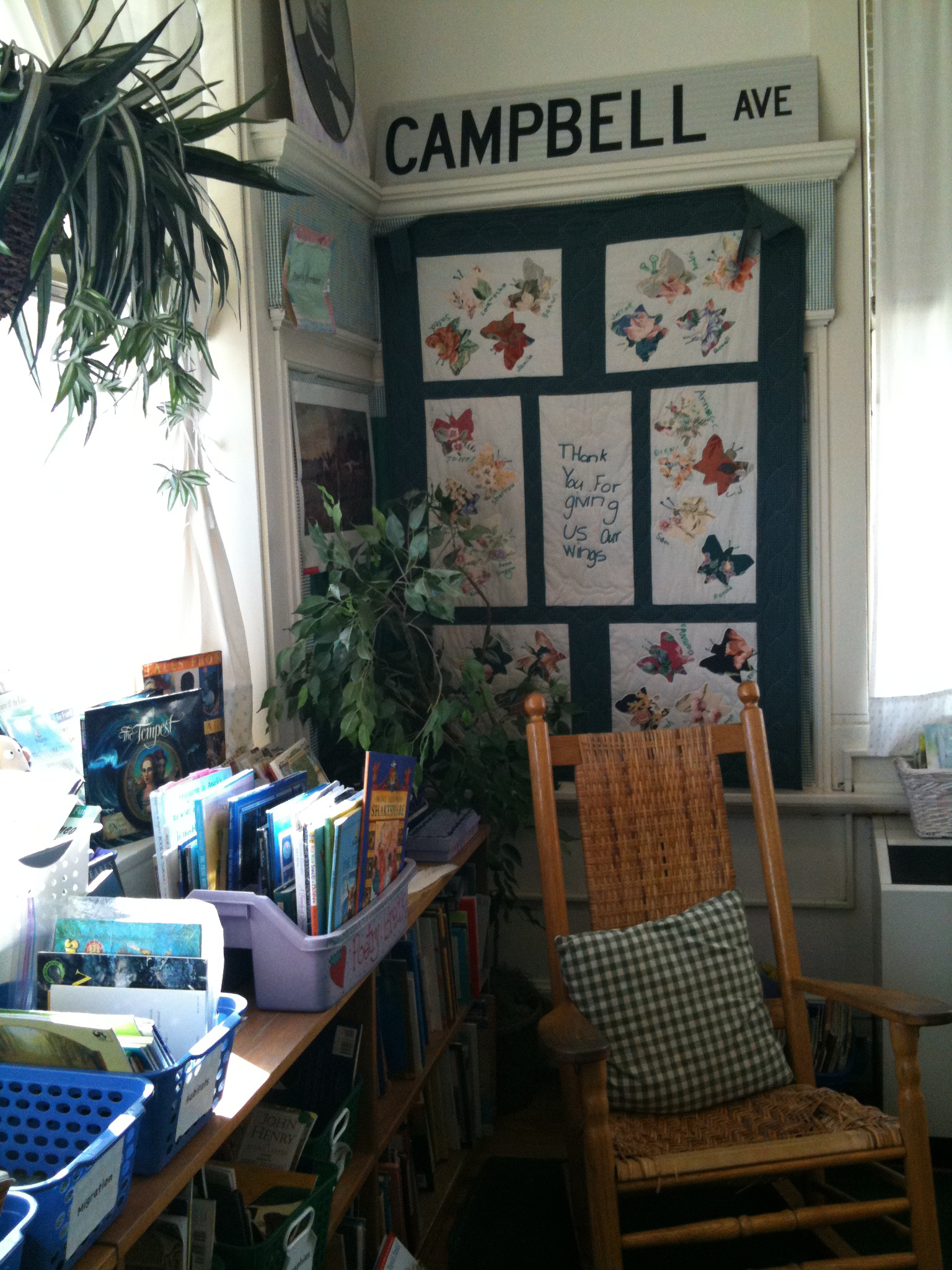
Yesterday, I sat in my rocking chair beneath the Campbell Avenue sign and read The Sweet Smell of Roses by Angela Johnson to my third graders.  This book is a tribute to the children who marched with Dr. Martin Luther King, Jr.  It was a perfect day to read it.

Many of the children who sat before me on the rug,  had stood beside me at the General Assembly Building the day before.  As we discussed the title, the children spontaneously broke into song.  They sang the freedom songs they’d been singing in music with Mr. Winslow: “Oh, Freedom,” “Ain’t Gonna Let Nobody Turn Me Around.”  There are sacred moments in a classroom and this was one of them.

I didn’t steal the sign that hangs above my rocking chair in Room 204.  It is a replica of the street sign on the Avenue that runs through Shirlington in Arlington.  We were given this replica when the street was renamed after my husband’s parents,  Edmund and Elizabeth Campbell, to commemorate their contributions to Virginia and Washington.  We decided it would be most appropriate to place it in my public school classroom.   I love that it is there.  The sign prompts history to be told.  I could tell a love story about my in-laws, and every word would be true, but that love story is part of a bigger story.  This story is about two citizens who made a difference in the world in which they lived.

I told their story last week.  I told of an educator and a prominent lawyer who worked tirelessly for the rights of all citizens.  I told how my father-in-law argued one of the cases that finally knocked out the massive resistance laws that segregated education for so long in the state of Virginia.  I told how my mother-in-law worked hard to be the first woman elected to the school board so she could stand up for the rights of children…  and how she later  started educational television in Washington (WETA).  I told the story of how my in-laws stood up for what was right in a time when it was costly to do so.

In teaching history, “then” becomes a lens for now. I explained that as citizens we can all make a big difference in little ways by standing up for what we believe is right. I shared with my children that I’d written letters to our representatives about the injustice of proposed school funding cuts that would abolish preschool, school breakfast, and would increase class sizes.

On Friday afternoon, as we streamed out of the school building towards the weekend, Sarah Gross was handing out flyers for a “Save Our Schools” rally at the capitol.

Save Our Schools.  It had a familiar ring and it took me a while to remember why.

“During the mid- to late-1950s, Edmund and his wife Elizabeth were instrumental in the formation of the Save Our Schools Committee, organized to fight Virginia’s policy of “massive resistance” to Supreme Court desegregation decisions. In 1958, he persuaded Federal courts to declare Virginia’s massive resistance laws unconstitutional. His efforts to oppose massive resistance to school desegregation resulted in a ripple effect throughout the South.” –Arlington Department of Libraries

Holding the flyer in my hand,  I knew I would attend this rally and hoped the parents of my students would find out about it, too.  I decided to do my part to make sure they did.  I invited parents and children to join me.

On Sunday we stood across the street from the General Assembly building and chanted. “Save Our Schools.”  “Freeze the LCI.”  “Tax cars, not kids.”  The capitol police were friendly and helpful.  They are parents, too.

As I stood with my husband, I couldn’t help but think of his parents.  I looked at the crowd — at the many children holding signs they’d made themselves — and I realized something.  When concerned citizens come together to protect the rights of all people, it is a love story.  It is a love story that makes a difference.

Posted in Uncategorized | 10 Comments

From the Heart

Happy Valentine’s Day!   Not much is known about St. Valentine, but it doesn’t matter, because this really isn’t a saint’s day.  Reason fades into the shadows as the heart has its day. City corners may be occupied by vendors with roses, balloons, and burgundy bears, but the heart holds its own in the marketing world’s swirl of lace and silk. The heart keeps it simple: “You are my friend.” This day is for everyone; it is the high holy day of love and friendship.  In the classroom, this is our most inclusive holiday.  The heart finds a way.

A high holy day (in any tradition) has rituals.  This is true in the classroom too.  In a red and white flurry of doilies and construction paper, hearts and stickers, tulle and ribbon, friendship is sweetened with heart shaped cookies and conversation hearts; Hershey’s kisses and Hugs; red lollipops and chocolates wrapped in pink foil.  White bags are decorated and then stand on the corner of each desk waiting.  The passing out of valentines is an old dance where there are no wallflowers.  Everybody is invited and everybody is included.

Everybody goes home with a bag that is overflowing with friendship.  It is an act of hope for our world.

We did all of this on Friday.  But we did something else too. And I already know this will find a place among the cherished traditions and rituals in this classroom culture. Every child wrote their name on a slip of paper and put it in a red box.  I passed out stationery and pink envelopes to be decorated.   Each child drew a name.  Letters were written and exchanged. Envelopes were ripped open.  As the letters were read, smiles grew.  The room seemed brighter in a silence filled with written words.

Tell someone you love them today.  Or better yet… write them a note.  Thank them for their friendship. The heart finds a way.  Today the heart has its day.

xoxo

Posted in Uncategorized | 5 Comments

Did Christopher Newport Have a Parrot?

“Mrs. Campbell, did Christopher Newport have a parrot?”

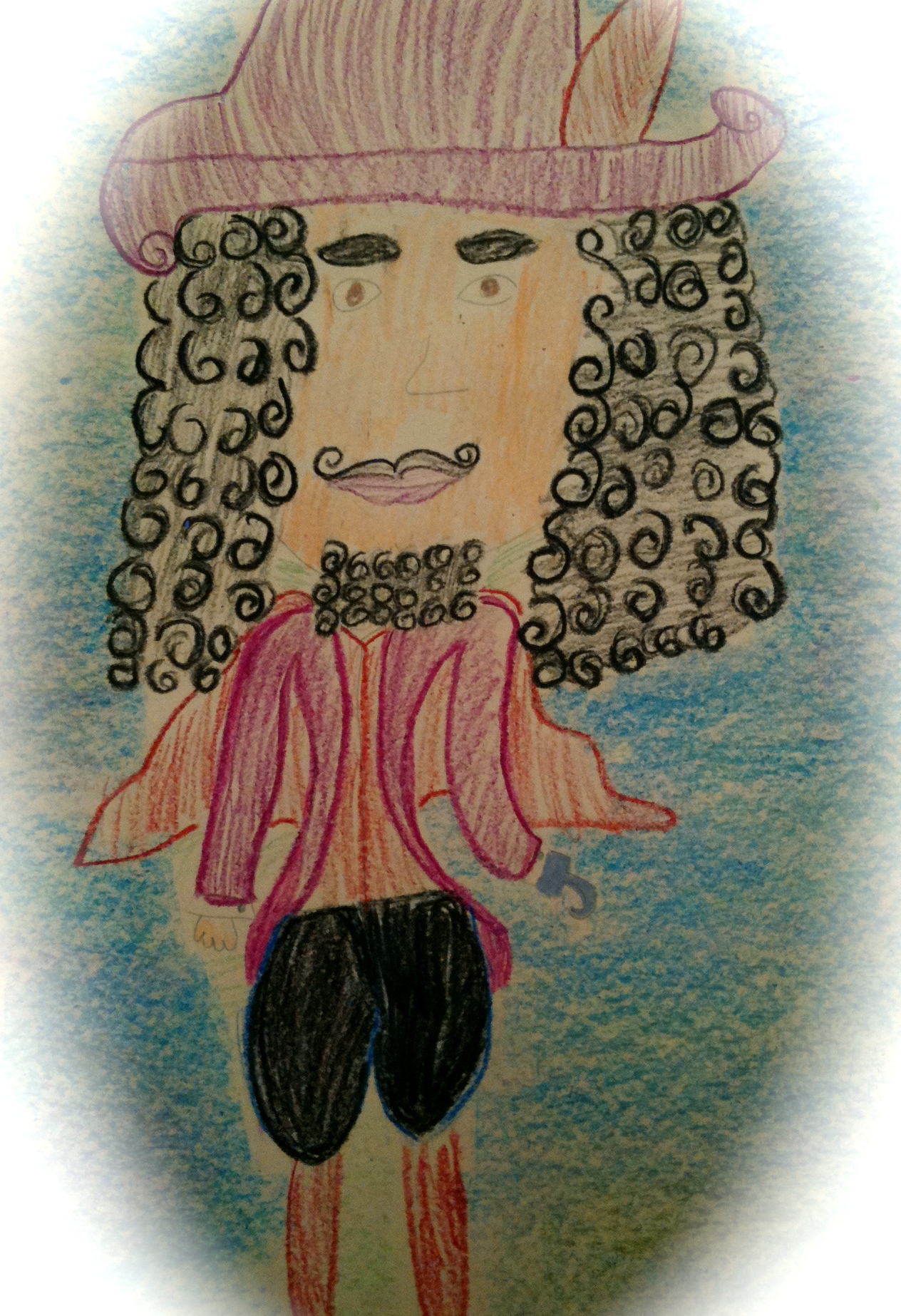
I had just finished describing Christopher Newport, the explorer who brought the first colonists to Virginia.  I explained that he had been the prototype for J.M. Barrie’s Captain Hook; and that he lived in the time of Shakespeare and that Shakespeare had been inspired by the story of his shipwreck on the Sea Venture to write The Tempest.


“Mrs. Campbell, did Christopher Newport have a parrot?”

In teaching history, can you tell the truth and tell the story, too? Can you teach that George Washington cut down the cherry tree, even if you know he didn’t?   Or that Christopher Columbus discovered America when you know he didn’t?  Or that settlers and Native Americans were friends, when you know they weren’t?  It is tricky business.

When I was in fourth grade, I was given a history book on the first day of school.  I was hooked from the first sentence:

The story of Virginia began with a little boy.  His name was Sir Walter Raleigh, and he lived in England.

I could imagine myself sitting on the shore, staring out at the water, and imagining a new land.  The story tapped into my sense of discovery and desire for adventure. I read most of the book the night it was issued.  I wanted to see how the story turned out.

King James claimed that Virginia belonged to him because he was England’s king.

The truth is that the land I lived on did not start with a little boy who lived in England.  Nor did it belong to King James because he was England’s king. There was a rich culture here long before the Europeans knew it existed.   The textbook never said that.  Just as it never said that the “servants” brought here by the colonists were not here of their own free will, or that they could not come and go as they pleased.

It was 1964.  As I was learning Virginia’s history in a segregated classroom in Williamsburg, Virginia, a debate raged in congress. President Johnson and Hubert Humphrey (heroes in my household), were fighting to get the Civil Rights act passed. Americans, black and white, risked their lives to get it passed. And hatred raged.  I never heard a word about it in school.

The men hurried on deck to see their new country.  It was four o’clock in the morning.  A sweet smell came over the water.  It was the smell of the land in spring when trees and flowers are in bloom.

I couldn’t wait to get to the end of the book to see how it turned out…

Virginia’s story is not finished… for history is made of living people.  The children of today will be the men and women who will the history of tomorrow.  They will be the people who must continue to work for “life, liberty, and the pursuit of happiness” for all people everywhere.

The story isn’t finished.  We reweave it as we tell it.  We are alert to stitches and to whole sections that need to be reworked.  I love the swell of hope in the sweeping narrative of our country, but I know that the real hope is in truth.  Story can be an effective delivery system for truth.  I work to guard against cynicism and disrespect as I tell it.

“Mrs. Campbell, did Christopher Newport have a parrot?”

He could have.  Maybe a parrot befriended him when the Sea Venture was shipwrecked in Bermuda.  Maybe he had the parrot on his arm when he swaggered into the alehouse on the other side of London Bridge… Maybe the parrot said, “Listen to his adventure; he has a story to tell.”  It could have happened, but I don’t think it did.   Let me tell you the story:

Where Fox school stands now,  there was once a deep, dense, dark forest.  Some say there was a path formed over thousands of years by stampeding animals.  This path was used by the native people and led to a river so rich with fish they could be speared. The river was then known as the Powhatan.  In the 1600’s, if you were native to this land and you were standing on the banks of the river on a certain day in 1607, you would have seen a strange looking boat in the distance…  in that boat was an explorer named Christopher Newport…

My fourth grade history book didn’t accurately tell me how the story began, and it couldn’t tell me how the story ends.  I know by teaching history, by telling our story through telling the truth, I can do my part help my students do their part to help the story come out right.  For everybody.

Posted in Uncategorized | 7 Comments

Working for Change

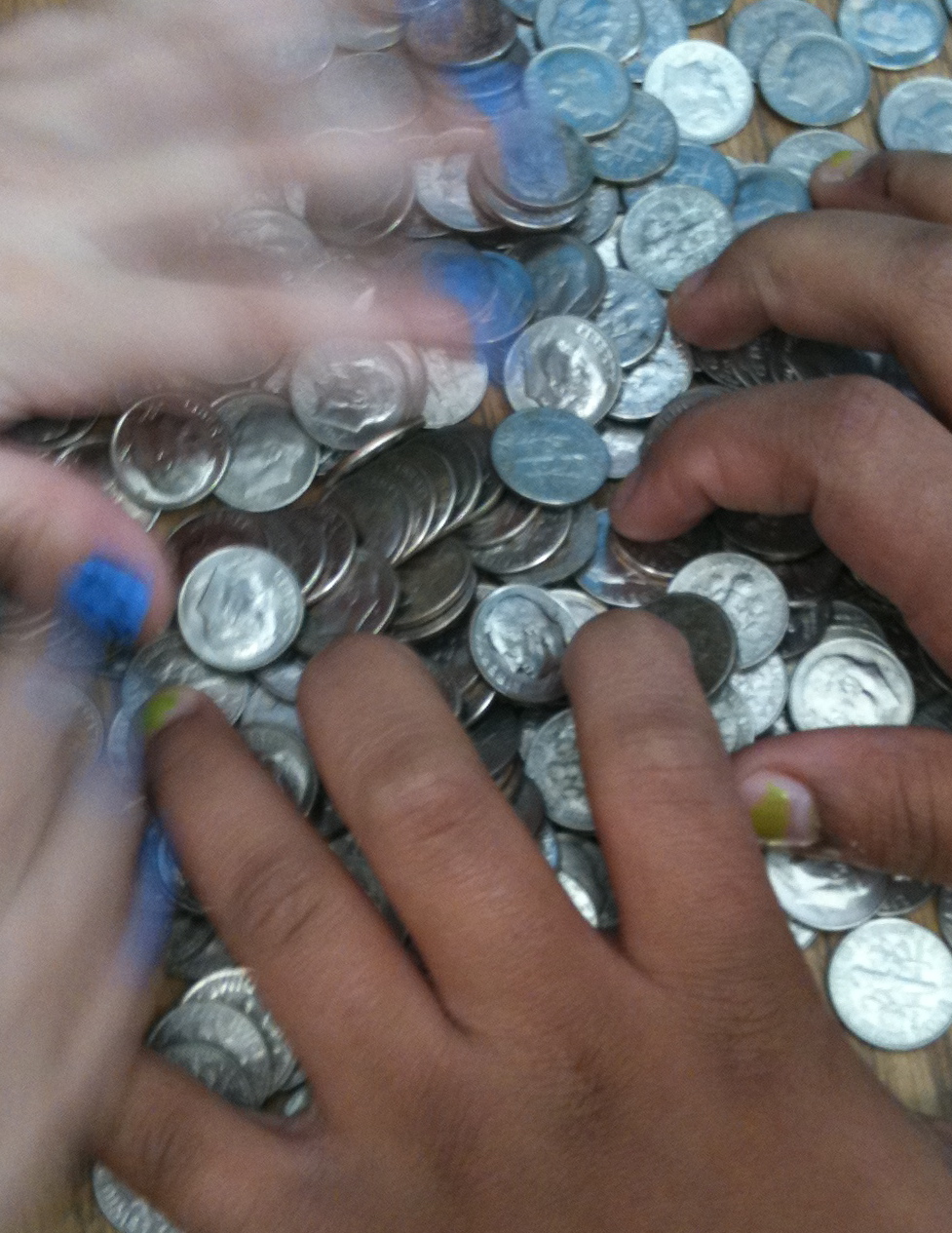
We’ve been working for change in Room 204.  We’ve been working for Haiti. We’ve been working for change:  for quarters, nickels, dimes, and pennies.  The children have cleaned closets, made beds, emptied dishwashers, cleaned rooms, and taken out the recycling.  We can’t go to Haiti to help, but there are other things we can do. We have worked for change and it has changed the way we see things.  We can help with our money and we can help with our words.

Before the earthquake, we were learning how to write thank you notes — a good thing to tackle right after the holidays – and it was the assigned writing project on the pacing chart. I brought in my treasured blue cloth bound edition of Emily Post to “mentor” us in style and voice.  Mary Lovely, personification of perfection and always correct, uses  “felicitous” and “serendipitous” like confetti in her just-right notes.  She writes a thank you note to Mrs. Eminent:

“The tea towel is perfectly exquisite!  I have never seen anything like it!  It is too beautiful and I love it more than I can say!”

We read these notes and noticed the structure and tone. With a sense of fun, we began to emulate them. It was good practice for voice.

On January 12, Haiti was hit with the terrible earthquake. We were hearing and reading about real time suffering.  Eight year olds and nine year olds lost houses. Parents. Lives. How could we help?  Our class representatives came back from the Student Council Meeting and told us that each class would be collecting money.   Mrs. Jacobs would give the class who raised the most money a pizza party.

We brainstormed chores that could be done at home for money: Chores for Change. Money came in every day.  Suddenly a new kind of thank you note began to emerge.  We became very aware of the people who were helping: the international aid workers.   Room 204 became a very special place this week.  The movie below will give you a glimpse. The letters are written in an international language: the language of encouragement.  These letters will be sent with the money. We raised the most in the school.  And we are also sending to Haiti the money that would have been spent on our pizza party.  There will be time for pizza later.  Now is the time for our help.  And our gratitude.

Posted in Uncategorized | 15 Comments

Emily and Me

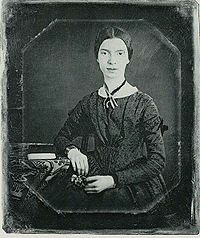
Samuel Clemens wrote as Mark Twain. Charles Dodgson wrote as Lewis Carroll. I was thirteen years old, living in Jerusalem,  and I wanted a pen name, too.  I kept it a secret.  In the gold trimmed pages of my red leather diary, I tried to emulate the authors I read: Louisa May Alcott, Jane Austen, Charlotte Bronte, and Emily Dickinson.   I signed those entries with my new nom de plume: Emily Lovejoy.

I locked up this secret and others  (“I like Robbie Schmidt”) within the pages of my diary with a tiny gold key.   I slid the diary under the bed and hid the key in a drawer. It turns out that you don’t need a key to open a diary. A paperclip will do.

One night, at dinner, my brother looked at me with that smile of mischief and impending torture that little brothers have. I wondered what was coming my way and was horrified when I found out.

“How is Robbie Schmidt doing, Emily Lovejoy?”

I gasped and sat very still… my face hot with embarrassment.  Even at nine, my brother was wickedly funny and was able to parody my diary with biting wit.  As mortified as I was, I ended up laughing, too.  When were older,  he would read something I wrote and say, “Whoa, Emily Lovejoy!” This was code for “language too flowery and grossly girlish.”

Emily and I still argue as I write.  She has been tempered over time, but she endures.  We write side by side… I with my favorite pen and she with her broad brush of starry storied light.

I’ve  learned that when I tried to emulate my favorite authors as a thirteen year old, I was using them as mentors.  Thanks to Lucy Calkins, Carl Anderson, and others at the TCWRP at Columbia University, I now consciously teach my third graders to read the writers they love, — to read like writers, using good books as mentor texts.   Notice it. Try it. Remember it. These are the three steps in working with a mentor text in Writing Workshop.

Learning to write from a writer you love turns out to be a time honored tradition. Emily Dickinson’s favorite author was her mentor, too.  She  said of Shakespeare, “Why clasp any hand but his?”

My little brother grew up and, among other things, taught creative writing in a university. This week would have marked his birthday. So on this particular Sunday morning, I am thinking about him, about writing, and about all he taught me about writing:

Everyone loves an artist.  No one loves an artiste.

You can’t just write about life.  You have to live it.

And his final and most generous lesson:

Don’t take death so seriously that you can’t be serious about life.

I notice it. I try it.  I remember it… everyday.  With love. With Joy.

Emily Lovejoy.

Posted in Uncategorized | 11 Comments

By Invitation Only.

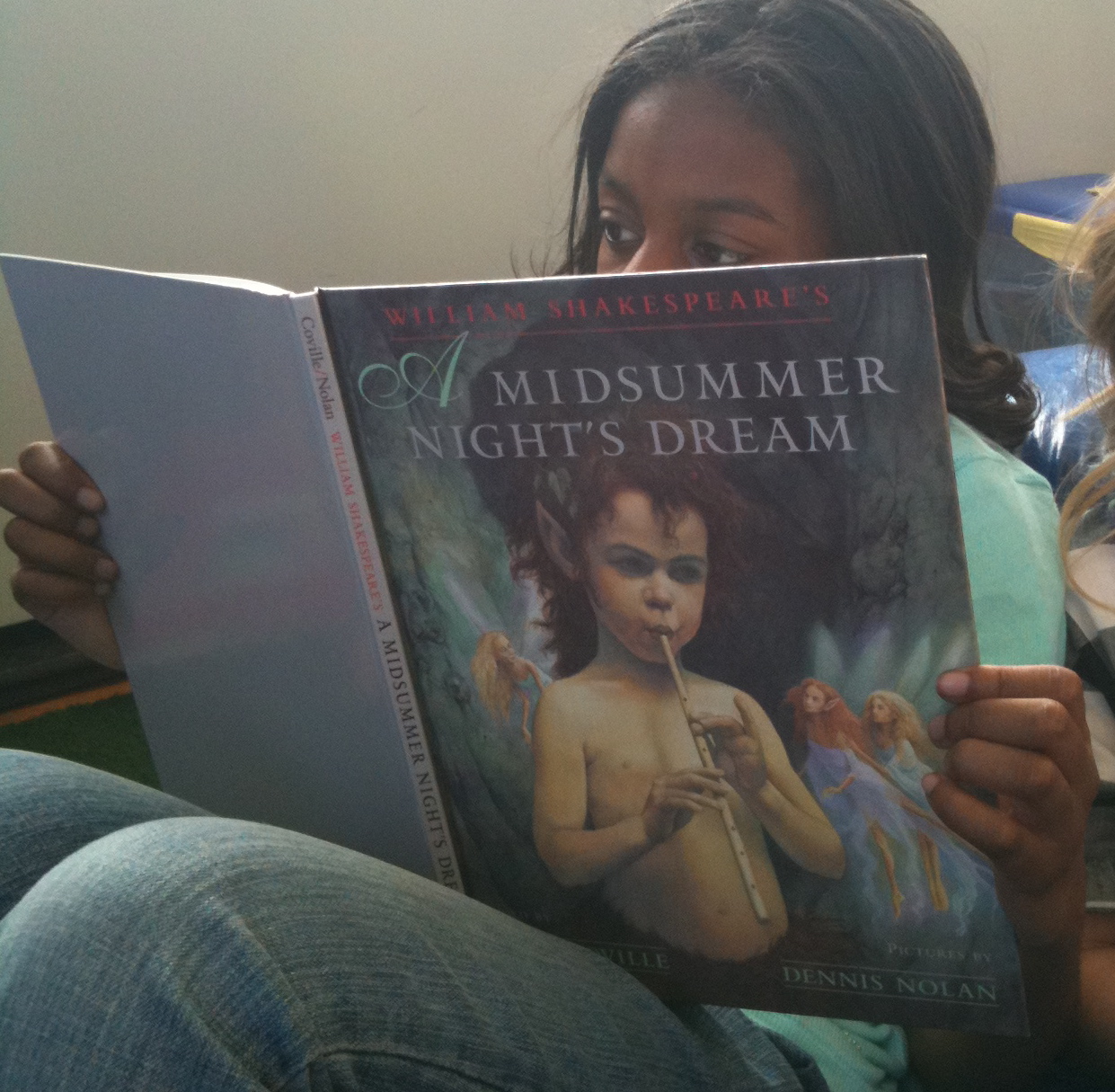
By invitation, Shakespeare comes into Room 204 and takes over.  Once in, his language and stories are so powerful that it is impossible to keep him out!  Children seem to be getting to know someone whom we can’t see.  But I know what’s happening because it once happened to me.

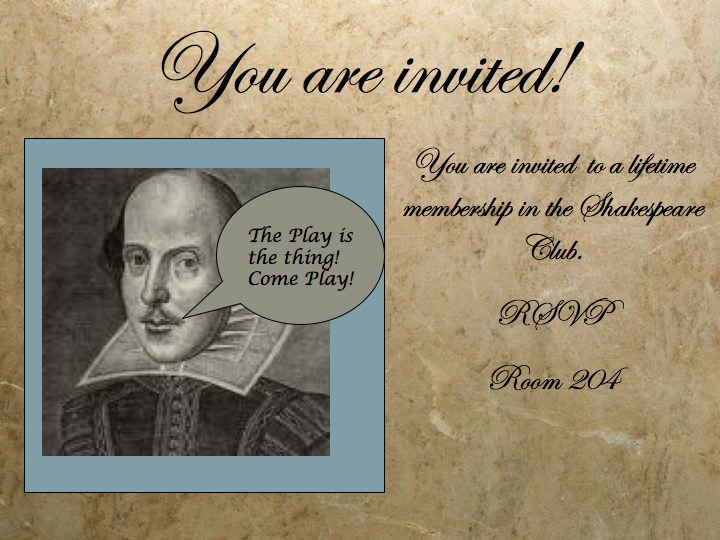
I never introduce Shakespeare to my third graders the same way twice, so again this year my introduction is brand new.  We sit in a circle on the rug.   I whisper something in the ear of the person sitting on my right.  The message is sent around the circle, whispered person to person.  The challenge is to get the message around the circle intact—to hear the words while your ear is being tickled with the ish, shish, whisp of whispering. “You are invited into the Shakespeare club,”  I whisper to the person on my right.”

You are invited into the Shakespeare Club…  You are invited into the Shakespeare Club…  You are invited to the Shakespeare Club…

The invitation makes it all around the circle. “You are invited into the Shakespeare club!” our voices announce in unison.  There is joy from the start.

“Have you ever told a secret to a best friend and then the best friend told it to someone else?”  Heads nod.  OMG.  It is terrible when that happens. I go on to tell how it happened to a girl  named Hermia who had fallen madly in love with a dreamy handsome poet named Lysander.  They’d made plans.  Secret plans.  And when Hermia told her best friend, Helena, she went and told Demetrius.  And he said… then she said… and it was a mess.  We draw them, play them, write letters to and from them.   An invitation requires a response.  And children respond to Shakespeare.  With pleasure.

We follow Shakespeare as he takes us deep into the woods on a Midsummer’s night.  It is not hard to believe that fairies are afoot. The air sparkles with their gossamer wings.   “Who messes things up in this play?” I ask.  Hands shoot up and so many different answers hang in the air.  We’ve pushed beyond the boundaries of the “right answer”  as the walls of our classroom melt away.   Choices tangle like forest vines and mischief makes a mess.  I remind the children that there are not right or wrong answers, but they should be able to back up their thinking.  Children listen to each other and agree or disagree and explain their answers as the threads of subplots are untangled.  We are building our  thinking stamina.  Shakespeare inspires it.

Shakespeare knew how to pull people out of the ale houses, through the cobblestone streets crowded with peddlers and carts, and into the theater. It wasn’t just the dog in an Elizabethan collar on a darkly stained wooden stage; or the puns; or the valiant sword fights; or the beguiling language.  Story, rich and deep,  was and is the invitation. To stand with the groundlings in the Globe — shoulder to shoulder, rapt and enthralled — is the invitation now.  We invited him.  He has invited us.   The favour of a reply is requested.

And we accept with pleasure.

Posted in Uncategorized | 7 Comments

The Science of Tears

I almost always cry when I finish a really good book.   When I  finished Teacher Man by Frank McCourt on a plane, I closed the book with a quiet sob (and no, it was not a sad ending). I looked up to find the passenger beside me staring in alarm.  I just shrugged, smiled reassuringly, and explained that there was nothing to worry about; I cry at the end of a good book.

I shared this experience with my students and naturally they wanted to see it happen.

“Oh…”  I explained,  “I don’t think I would cry with you.  It’s too complicated…  I have to stay in charge and I couldn’t lose myself in a book like that with you all right here.”

And then someone said it:  “Science experiment.”  Well, for science… that’s different.  We agreed that the next time I got to the end of a book I was loving, I wouldn’t read the end at home.   I would wait for our silent reading time in Room 204 to finish it.  We knew I would cry at the end of a good book on a plane, but would I cry at school?  All good science experiments begin with a question. They hypothesized that I would cry.  I wasn’t sure.

I had twenty pages left of The Song Catcher by Sharyn McCrumb, I settled myself in a beanbag, and we all slipped into the companionable silence of reading.  I finished the book dry-eyed.  I concluded I would not cry at the end of a book in my classroom with students.

Not so fast.

“It might not have been the right book,” someone said. They were isolating the variable.

“You need to try it again,” said someone else.  They were thinking in terms of repeated trials.

“Okay,” I said.  “After the holiday break.”

When we came back from break,  I was engrossed in the The Help by Kathryn Stockett.  By the end of silent reading on Thursday I was close to the end.  The afternoon announcements came on and the principal said they were calling for snow and to be sure to listen to the radio for school closings in the morning.

“If it snows, all bets are off, “ I said.  “I am not going to wait for Monday to finish this book.”

It didn’t snow.

My book was compelling and I could hardly wait to finish it… I was invested in the three protagonists. I had to know how it turned out and hoped hope would not be betrayed.   It was finally time for silent reading on Friday.  Twenty pages to go.

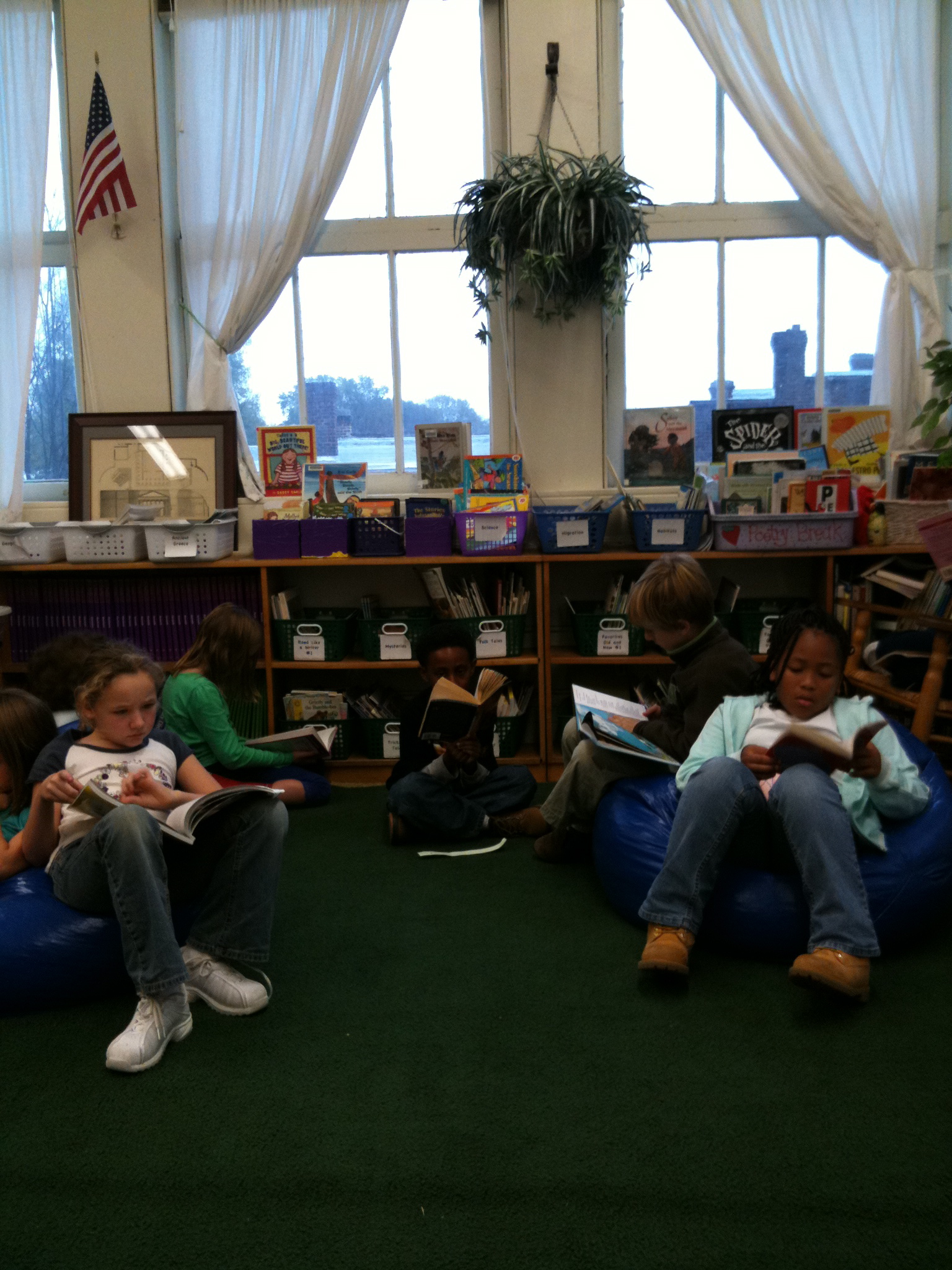
We decided that I would read on the rug alone.  Less distraction.  They read at their desks and I read in a blue beanbag on the green rug.  Every now and then I was aware of someone looking at me, and whenever I looked up a different third grader was keeping watch.  Observation is part of the scientific process. I went deeper into the book.

The first whisper.  “She’s crying.”  I heard it but I kept going.  One more page…

I closed the book.  The children were silently creeping towards me.  They surrounded me on the floor.

“Do you need a hug, Mrs. Campbell?”

“What was the book about?”

I knew that question was coming.  And I knew it would be hard to answer.

“This book took place in Mississippi in the time that Dr. Martin Luther King, Jr.  was beginning his important work.  It was a time when many white people were unfair to African Americans  and black and white people did not trust each other.”

Hands reached out to help me up.  “But we trust each other, Mrs. Campbell.”  It was Duron.  It was his ninth birthday.

I wiped the tears from my face and smiled.

“Yes, we do trust each other.”

Every good science experiment involves discovery.  And now I know why I cry at the end of a good book… it is the thrill of resolution, a promise delivered, the surprisingly clear and sparkling waters at the confluence of hope and trust.  Those are the books I choose. Those are the books I love to read.   Those are the books that make me cry.

Posted in Uncategorized | 11 Comments

Lessons From a Reading Life

I’ve read a lot during this holiday break—and am reminded that most of what I know about reading I’ve learned on Christmas vacations. And summer vacations. I’ve learned about reading in tree houses and on trains; on sandy beaches and wooded trails; in cabins during snowstorms and in tents under starry skies. I’ve learned reading through time.

Time has shaped my reading preferences. If the story has a dog or spider that dies in the end, there had better be some hope around.  Otherwise I feel betrayed.

If a young girl discovers a desolate garden with a rusty key and pours her hope and heart into it, something better grow.  If a nanny suddenly appears with a magic umbrella and then suddenly disappears because the wind changes, I need to know that she left that corner better than she found it.

Endings are not always happy in the books I love.  Shakespeare’s King Lear pays such a terrible price for being blind to his youngest daughter’s sweet and simple truth. Jane Austen’s heroines can be blind to the simple truth, but recognize it in time to live happily after. Redemption is a relief in reading.

Unrequited love is okay as long as it is a steppingstone to an enduring relationship, or, at the very least, a sustaining and life giving memory.  In the end, the clever and coquettish Scarlett O’Hara may not get the boy, but if she looks toward tomorrow in a way that leaves the reader looking forward, I’m good.

These are my preferences. I guide my third graders as they find their own.  I teach them that reading is thinking. Every book they open is an invitation to an ongoing conversation and an invitation to slow down time,… to make the world a bigger place.

I teach about choice. Sometimes you choose a book, and sometimes, a book chooses you.  We can make mistakes. We might pick the wrong book; we might pick the right book at the wrong time. When it comes to feasts you don’t have to finish everything you start… and reading is a feast.

Every day I give my students time to grow in the reading life: time to open books and fall in, time to scan the narrative landscape and pan for gold.  If a reader’s progress slows, I move fast to assess, assist and get the reader back on his or her way.

I can’t give my students tents under starry skies or cabins in snowstorms. But I can give them a sunny book-filled corner classroom on the second floor of an old red brick school.  I can give them time, support, and choice.  And I can point the way toward a literary life.

Posted in Uncategorized | 5 Comments

Remember December

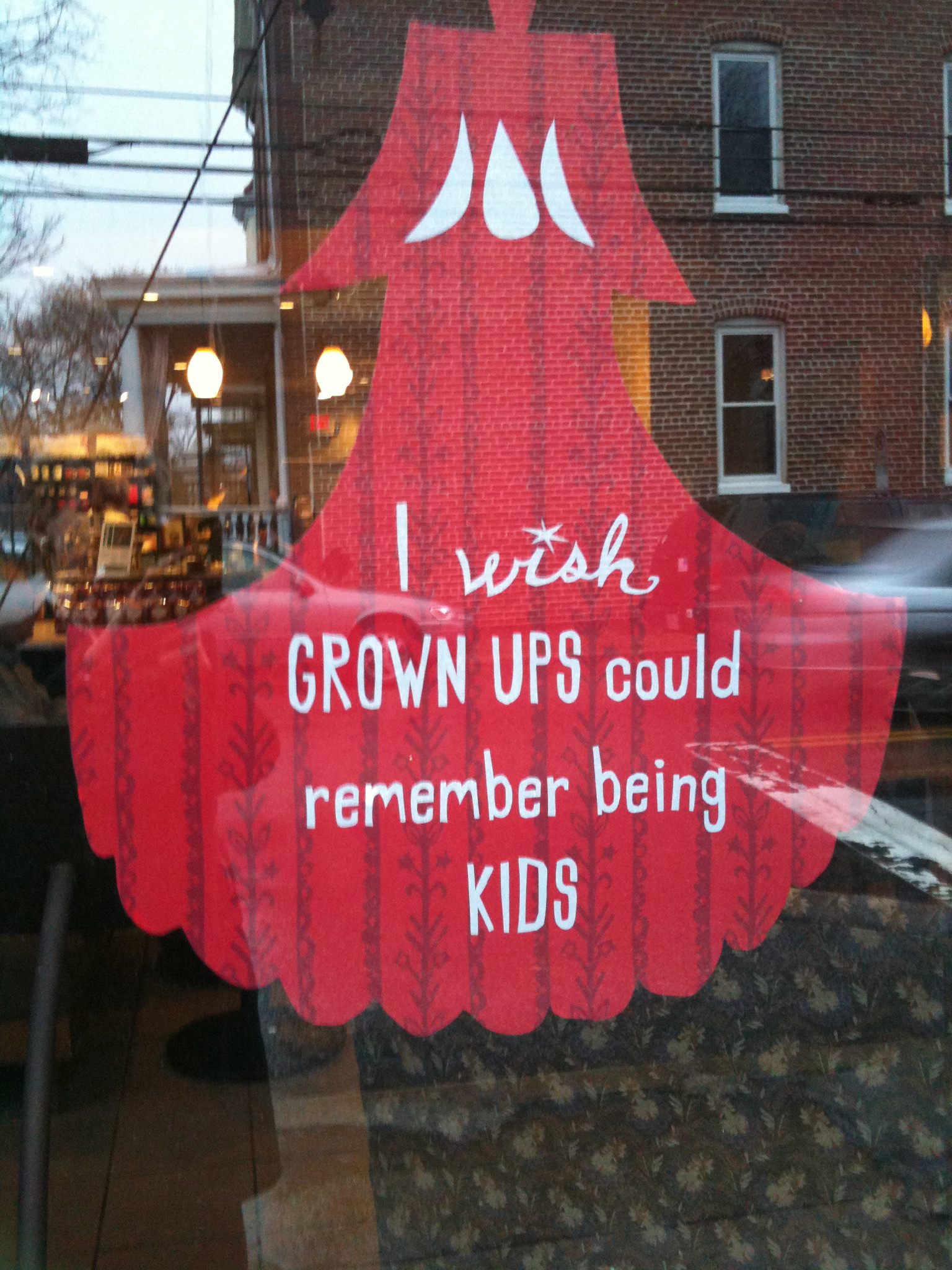
Many mornings I go to Starbucks on the corner of Stuart and Robinson in the Fan.  It is a quick walk to and from school and a quick start to a good day.  The December decorations there include a big burgundy banner with these words in white:

“ I wish grown-ups could remember being kids.”

I smile at this.  My third graders are happy to help me remember  December.  When I was in third grade my mother placed lemons, cloves, yellow tulle, and white satin ribbon in the center of the kitchen table.   She explained to my brothers and sister and me that we would make pomanders for our teachers.  It was hard.  My fingers hurt from poking in the cloves and it took a long time.  I’m sure I complained some.  I know I may have wanted to stop. I remember pausing and staring out the kitchen window at the York River.

I often wonder why that is what I remember: sitting at that table with my hands sticky with lemon juice and my fingers sore from the sharp cloves, citrus in the air, looking out beyond the woods at the river.  I didn’t even know what a pomander was!  And I could not possibly have known… This.  This is a Christmas memory.

Or this…  I sat on a kitchen stool next to my grandmother in her pristine kitchen in West Virginia. With a cold stainless steel knife I learned how to frost shortbread Christmas Trees cookies with pale green icing.  There wasn’t even a whisper of, “This is what you’ll always love about Christmas and this is what you’ll share with granddaughters.” Yet the memory has echoed through all these years.

The burgundy banner is a reminder in this season of hope and miracles.  As I help my students name what is special about the holidays, not one child has mentioned what they want for Christmas or Hanukah. It is not what they talk about.  They talk about making cookies, reading holiday books to younger siblings and cousins, setting the table, and helping with decorations.  The task of getting ready for something special is the most special of tasks. 

What do children want?  Robinson and Staeheli in Unplugging the Christmas Tree say this:

Children want and need:

1. a relaxed and loving time with family:

2. realistic expectations about gifts;

3. an evenly paced holiday season; and

4. reliable family traditions.

Getting ready for something sacred is sacred, especially if it is done together.  Now it’s your turn to remember.  Share it.  Get ready. Together.

Posted in Uncategorized | 3 Comments