December at the Door

December knocks on my classroom door in the way that no other month does or can.

“You are not letting me in,” says December.

“Oh, but I will!” And I do. But I do it carefully.

I generally love Target commercials because they tell a concise story through a brightly sound-tracked and brilliantly styled montage… but their holiday commercials are too much.  There is that one commercial where the relatives are barely out of the house at the end of Thanksgiving dinner and the house turns into the perfect Christmas house. It happens magically, as if something invisible is touching each corner with a magic wand. And then there is that commercial with Granny, frenzied, on the Nordic track on December 1; she wonders how will she get it all done?  December didn’t wait for an invitation in either of these scenarios.

Last week, I opened the door a little on December 6. I opened the door for St. Nicholas, the patron saint of children, and December rushed in right behind him. We gathered on the rug and I told a legend about how St. Nicholas came to the rescue of a widower and his three daughters who had no dowry.  I also told a folk tale about a ginger cookie baker who learned generosity on St. Nicholas Day.  We talked about how oranges and gold covered coins came to be associated both with St. Nicholas and with Hanukkah.  When the children came back from music class, they found frosted ginger cookies and chocolate covered coins on red napkins.  Ginger for the baker…  Coins for the anonymous dowry thrown through the window…  Red for St. Nicholas’ cloak.

A chocolate coin covered in gold foil… a small piece of gingerbread… a red napkin… a story. The tangible is lit by the intangible. We gather. No bite is taken until the story is told and taken in. We slip underneath words and barriers into something deeper and common.  Meaning is built without dogma.  We find meaning in celebration. This is not something I learned to do as a teacher.  I learned it as a mother.

My children and I learned it together.   We learned to celebrate Jack Frost’s first visit; the first sighting of Robin Red Breast; the night in June when the lightning bugs first flicker; falling stars at the beach.

December is bells, beeps, and a whistling whoosh, but tradition knows what marketers don’t: the quieter and simpler events are the ones that make their mark in memory. They aren’t magic and they aren’t frenzied. Children look to us to help with this.

This week I will open the door a little wider for December. I will invite children to bring in their favorite holiday books to share with one another.  They will interview their parents about traditions and we will write December poetry.

And then on Friday afternoon we’ll walk away from school and December will walk out with us.  December will swirl and dance with each of us in a different way.   Our own traditions wait for us.  And some are waiting to be made.
Posted in Uncategorized | 8 Comments

Dick and Jane Have Their Day

On Thanksgiving we were in the car on the way to my mother’s house. It was the kind of day in the fall that I think of as a “Dick and Jane” kind of day—where the sun is shining and the air is crisp and cool.  Most of the leaves have fallen but some seem forever suspended just above the ground—as if on a page in a book.

I entered first grade at the American School in Germany where I’d lived since I was a baby.  My first grade teacher, Miss Matthews, was beautiful and kind. Not long after school started, it was time for my family to leave Europe and return to the United States.  Miss Matthews gave my parents our basal reader to read with me as we traveled. The book was called Fun With Dick and Jane.

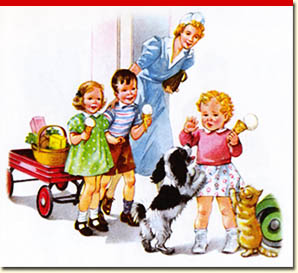
I’d been read to all my life and now it was my turn to read to my father. The words were easy and I loved the stories about Dick and Jane and Baby Sally.  They lived where I was going: America. They called their mom and dad ‘Mother’ and  ‘Father.’  I learned those easy words, but I also learned to see beyond those words.  I learned to use my imagination to turn simple sentences into beautiful stories.  I knew the red wagon in the picture was the way to adventure and fun.

My father and I read about Dick and Jane and Baby Sally, as we traveled through the Alps on a train.   We ventured into their world from varnished deck chairs in the cold sunshine as we crossed the Atlantic on a ship.

One morning, just as the sun was peeking over the edge of the ocean, my parents took me out on the deck of the ship.  They wanted me to see the Statue of Liberty.  “You are home,” they said as she came into view.  I thought to myself, “This is where Dick and Jane live.”  I looked at the New York skyline and thought about their dad.  The story unfolded in Dick and Jane’s dialect: “Father must work and work.  Father works in a big building.  Father works in the city.”

We moved into a house in McLean, just outside Washington, D.C.   I was pretty sure that Dick and Jane lived in our new neighborhood and I tried to figure out which house was theirs.  I would see the red wagon in one yard, but then I’d see Puff, their cat, in another yard.  I was sure that Jane would be fun to play with.  She had a brother and a sister… just like me. And I wanted to meet her dog, Spot.  I imagined that I would stand beside her and call, “Run, Spot, run.  Oh, Jane, do you see Spot run?”

I looked for “Mother,” too.  In the book she was always standing on the front steps, in a crisp red dress, calling the children. I knew that if we could peek in the door behind Mother, we would see cutout patterns for Halloween costumes on the dining room table or half-written letters. If we looked into the kitchen we would see baby bottles lined up by the sink and a high chair with sticky plastic keys on the tray.  We’d smell pot roast in the oven.   There would be magazine scraps Jane had forgotten to pick up, and crayons that were too hard to get back in the box.  There would be records playing—a mix with skips and scratches:  Classical. Jazz. Broadway.

Dick and Jane taught me a lot.  I learned that real or not, characters in a book make life more real. I learned that learning to read isn’t just about the book you use.  It is about the experience.  And relationship.  And imagination.

My father would say he knew nothing about teaching reading when he taught me to read.  But the truth is no one knew much.  No one really knew why some kids could read and some couldn’t.  They were asking the question, but they weren’t finding the answer.  Research now tells us so much more than anyone knew back then.

Now we know that that deep reading is about sustained engagement with the text.  It is about connecting with characters and being able to picture their lives off the edge of the page. It is about wondering and asking questions.  It is about looking for what we read in real life. Dick and Jane sprang to life for me because I understood that books and stories were about connections and imagination. I learned that early because my parents read to us.  I was lucky.

On the way to Thanksgiving dinner my husband drove and I read aloud.  I read a New York Times op-ed piece by Thomas Friedman. He presents new research that reading aloud gives children, families, and nations an advantage.  My parents did their part: they filled our world with words and books.  And Miss Matthews did her part: she put a book in my hands that I was to read myself.

Trees stood beyond the stone wall that runs along the G.W. Parkway.   Most of the leaves had fallen, but some, just a few, seemed suspended in the air. The sun was shining and the air was crisp and cool.  All these years later, I still know it when I see it: a Dick and Jane kind of day.

Posted in Uncategorized | 6 Comments

It Matters

“Mrs. Campbell, it feels like we are a family in here.”  I put my hands on her shoulders and smiled down into those earnest eyes– I nodded because I felt it, too.  Mission accomplished.  And right on time.

In these first nine weeks I juggle the pacing charts, diagnostic tests, and benchmarks. But the most important work I do in this first quarter is construction work. We build. We’ve been building stamina, rigor, vocabulary, problem solving skills, and a foundation that will serve these learners for a lifetime.  The most important thing we build in this first quarter is trust.

There is no one secret to building trust. We sing. We play. We tell jokes and stories and we learn to write our lives. We laugh.  A lot. We recite poetry.  We turn books and poetry into Readers’ Theater.  We learn algebra for fun so we can see where this third grade math is taking us.  We learn to give each other feedback.  We learn how to show what we know in lots of ways.  As we build our common life, we build a common canon of folktales so we can make analogies and build theories about literature together.

We learn that there is plenty and there is never an excuse to grab. Not ever.  Everybody knows where there are extra pencils, sticky notes, paper clips, markers, glue sticks, flair pens. And everyone knows how to put them back… in the right place. Everyone knows how to sweep.  And dust.  And recycle.  And straighten the desks.  These tasks are easier if Aretha Franklin is playing in the background.  After all, this is the work of R.E.S.P.E.C.T.

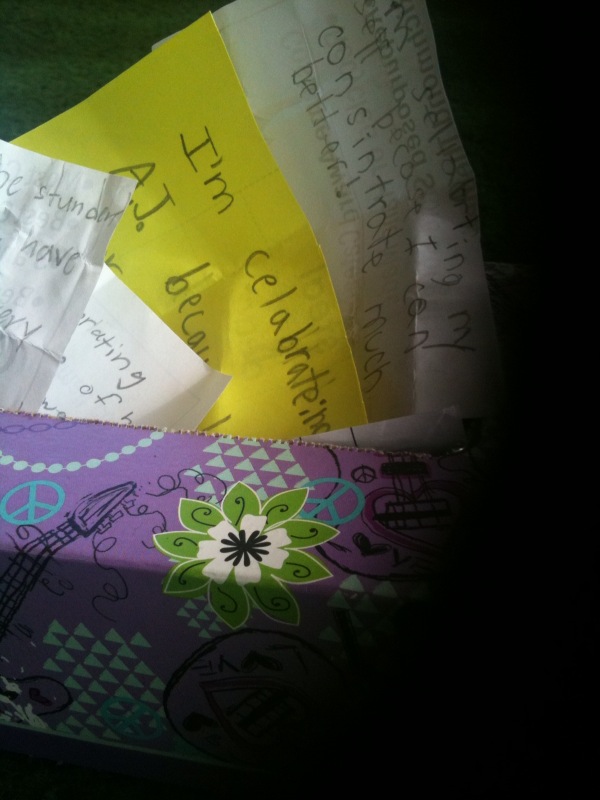
We learn how to celebrate together and we learn how to celebrate each other.  An empty Kleenex box has become our celebration box. Every Friday, each child writes a message that celebrates some aspect of our week together and tucks it in the box.  Often their messages are about each other, but sometimes they celebrate their own accomplishments.  They notice when someone finally gets regrouping.  Or when someone is improving.  Or when someone does something kind for someone else.   Sometimes I make cookies, but most of the time we just have popcorn and somehow even that becomes special.

These days there are policy people who say class size doesn’t matter. At first, this confused me because I have plenty of research (and empirical data) that says class size does matter; it matters a lot.   And then I started paying attention to the statements: The research says class size isn’t as important as a rigorous curriculum; or a good teacher; or a good leader.  These “mixed-variable” value statements masquerade as research for the sake of policy talking points.  I worry about the effect this will have on class size in the future.  Good teachers and good leadership and a rigorous curriculum are essential.  But class size matters, too.

Every child needs plenty of access to his or her teacher in an atmosphere of trust and community. The size of a class affects this.  We learn best when it feels like we are a family in here.

Posted in Uncategorized | 3 Comments

Tell It Again

This summer we read books to our  granddaughter.  As soon as we would finish,  baby Georgia would push the book back toward us.  The message was clear: “Again.”   And so we would read it again. And again.  And again.

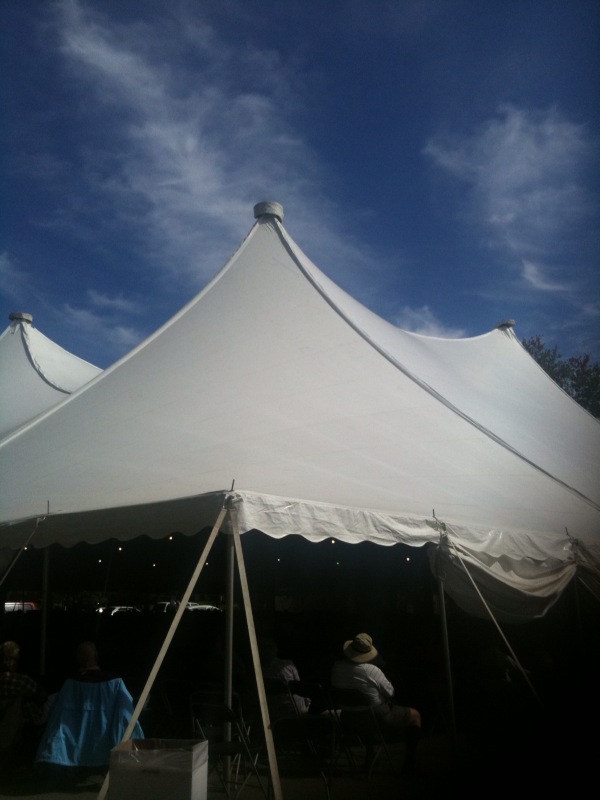
This weekend I attended the National Storytelling Festival with friends.  I’ve done this for close to twenty years.  We  hurried towards the tents in the crisp light of a mountain morning.  We had come to listen.  Again.

Storytellers stood up to tell traditional stories or personal stories or epic tales that have been told through the centuries.  Listeners laughed and nodded as they recognized themselves in the least likely characters.  When the tale was told, people wiped tears from their eyes, jumped to their feet, and cheered for stories known forever.  People nudged requests toward tellers the a way a baby girl pushes a book back toward a grandmother.  Again.  We want the story again.

This is no idle pastime for me;  I am a storyteller.   My listeners do not wait for me in a white tent under a bright blue sky.  They wait for me in a classroom.  This morning they will wait to hear a  story. Again.

They  hear myths and folktales and fables.   Every  year I tell Shakespeare and Homer and Aesop. We tie folktales into the teaching of geography and history and science. Biographies introduce third graders to the leaders who have led the way for new leaders (and I remind them that some of those new leaders may only be eight or nine now).  The narrative sweep of story deepens the majesty of the moment.  I know that I am lining hearts with gold and deepening the well of image, allusion, and metaphor that will serve my students for a lifetime.

The most important thing I do on the first day of school is tell a story.  Story builds community.  The stories we tell become “our stories.”  We reference them easily and characters become eccentric ancillary members of our tribe.   We begin our year with a folktale.  There is gold.  There is grace.  There is transformation.  We are reminded there are stories worth telling.  And living.  Again and again and again.

Posted in Uncategorized | 8 Comments

Oh, Look!

My third graders have informal homework on the weekends.  It is not something  I can check or test or monitor, but it is key to their writing.  The assignment is this: “Look at the world with the eyes of a writer.”   We don’t really get started on this until October;  we need time to understand what it means– to study how authors “look” and then to examine what they do with what they see.  “Look” is one of the first words that children learn to read and spell.  This word is  their first clue to going deeper into the reading and writing life.  And this year I am learning along with my third graders how key “looking” is to science.

I started outdoor science this year as my own experiment.  I knew it would build my science instruction, but I’ve been amazed how science has integrated writing and the comprehension skills  essential to deep and thoughtful reading: predicting, asking questions, setting purpose, checking for details, tracking information, and inference.

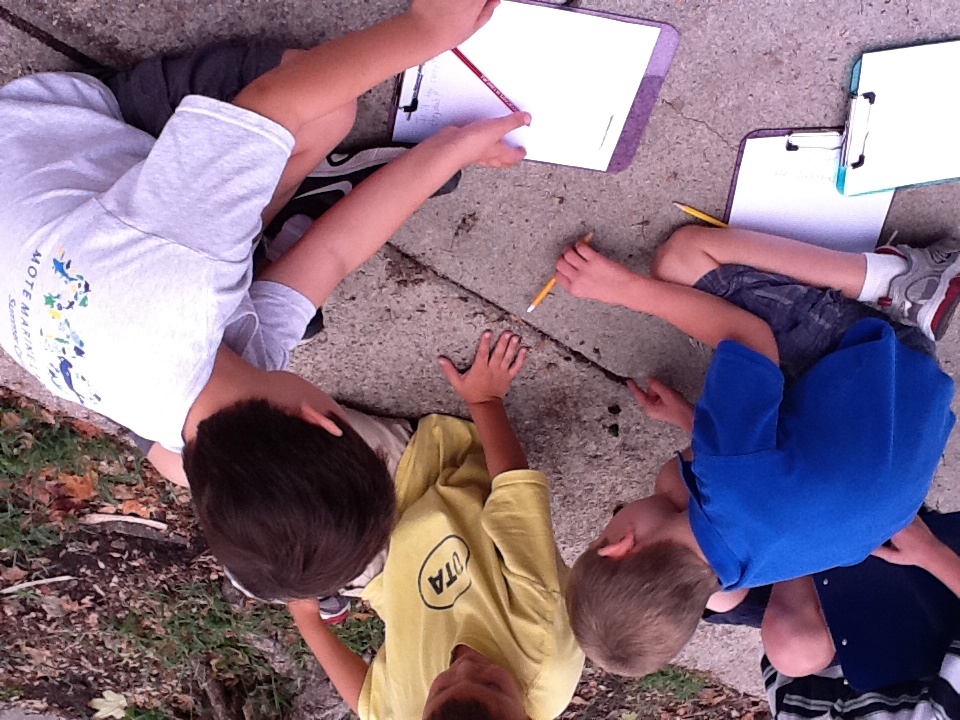
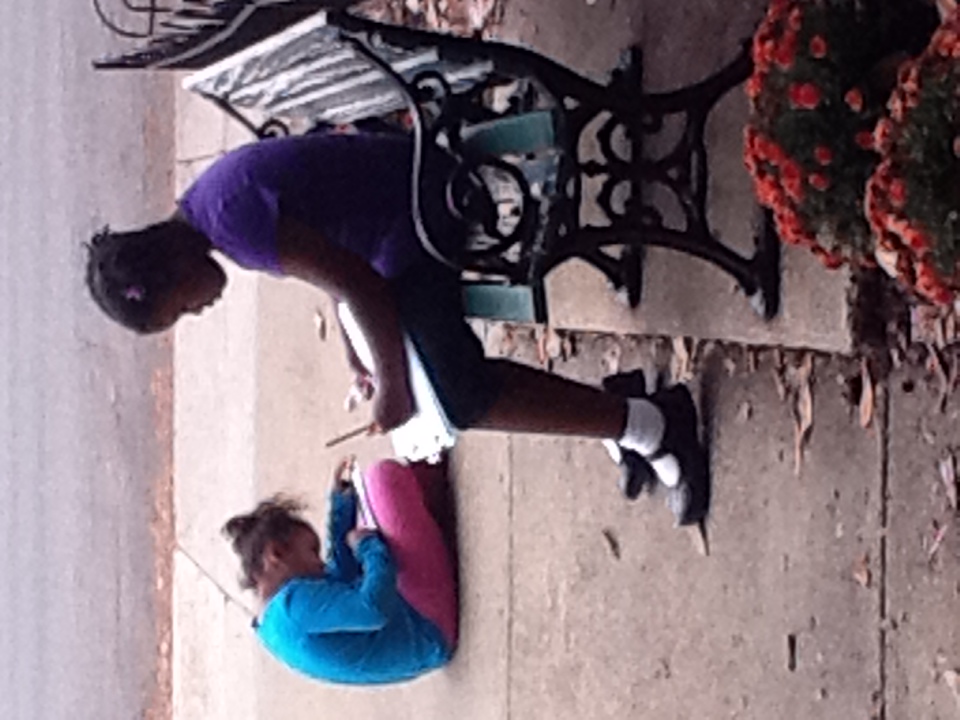
Our school sits on a city block.  We are lucky that we have so many  insects, birds, shrubs, and trees to examine and explore.  I had no idea how much was out there. The strawberry-red doors of Fox School open wide as we spill out onto the sidewalk that has become an extension of our classroom. Out we go with clipboards, pencils, hand lenses, and eager curiosity. I laugh now when I remember how I hoped we would see something (anything!) the first day we went out.

We often start with an experiment or a scavenger hunt or a question. But this is just a way to a way to get us started.    When I don’t know the answer to a question, we find someone who does.  One day Mary Gwen noticed that huge numbers of dragonflies were flying high above the ground.  We lined up and went to ask Ms. Brown, the fifth grade science teacher, why this might be so.  She hypothesized with us that perhaps a cold front was  coming and they were hunting mosquitoes.  The next day, children confirmed this prediction as they came into the room.

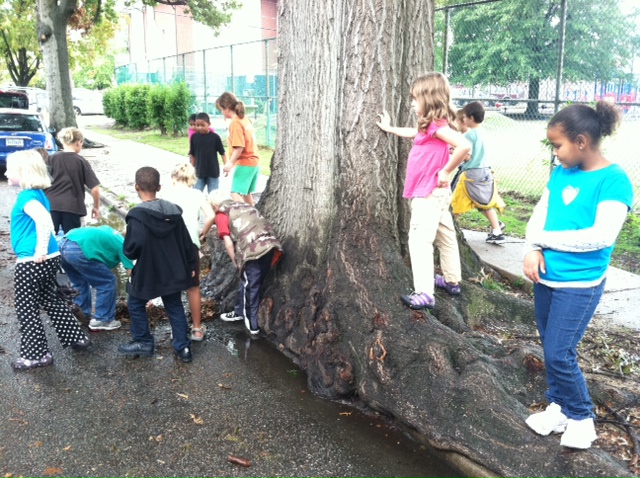
In this first short month, we’ve seen countless monarch butterflies on their way to Mexico, cicadas, dragonflies, earthworms, and ant colonies. We have found lichen and moss and mushrooms in the rain.  We’ve seen the tiny droplets or rain cling to the gossamer silk of spider webs.  We’ve dropped sticks, and watched them travel, in gullies of water just after a storm.  We’ve collected seeds and leaves and rocks.   The children tape samples to index cards and label them.  They add them to the basket of field guides that sits on the window sill of our classroom.  We are looking and seeing and naming and, yes, loving our world.Most of these photographs were taken by Lorraine Fisher.

Posted in Uncategorized | 2 Comments

Getting Started

Today, the first Tuesday after Labor Day, is my “Teacher Anniversary.”  The true celebration begins when the bell rings.  A new class of children will be invited to learn with me and to love the world with me.  It is the blind date of all blind dates.  It is an arranged marriage that turns into a love match every year. We will be together for 180 days; at the end they will tell me that I seemed strict at first, but that it turned out I wasn’t.   They will say that the writing was hard at first, but that it turned out it wasn’t.  They will say that they wish we weren’t done.  And I will remind them that we don’t have to be; Lindsay, who is doing her senior internship with us, was once a third grader in Room 204.

I will be the matchmaker of books and children; they will learn to trust my choices and then they will learn to trust their own. Their stories will unfold and be written and shared and told. They will leave as deep readers and writers.

Thirty-three years ago, on the Tuesday after Labor Day, I walked into my own classroom for the first time. Twenty-one of those years have been in Room 204 at William Fox Elementary.  Fox  has its own big celebration today: it opened its doors one hundred years ago. We have a lot to celebrate.  A new group of third graders is invited.  It starts when the bell rings.

Posted in Uncategorized | 11 Comments

My Blackberry Summer

In every walk with nature one receives far more than he seeks.                                                — John Muir

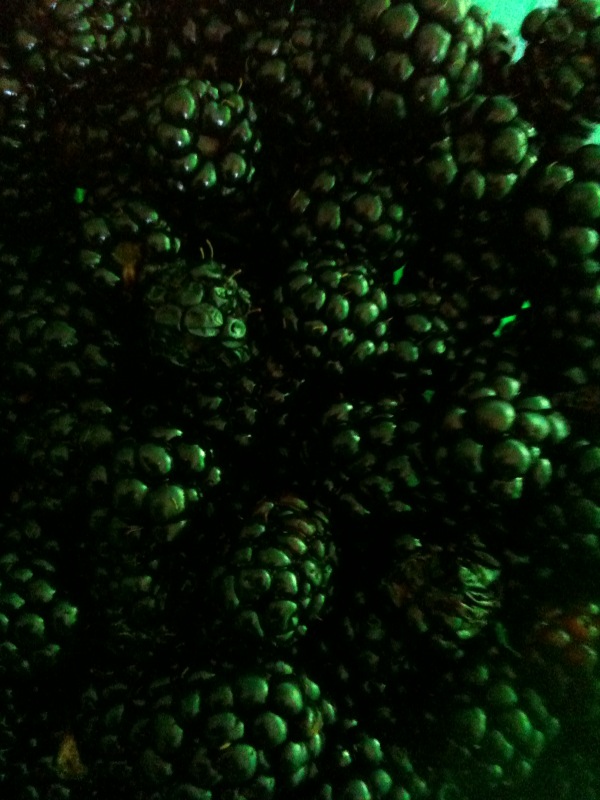
I’ve spent this summer outside.  Most of my pictures are  archived in memory and can only be shared with words.   Like this one: on an early mountain morning, mist rising from the dew-drenched ground, I am in a peach nightgown and a blue jean jacket and picking blackberries.  I make my way down the path to the woods by the river.  I am smiling, but not for a camera… there isn’t one; I am completely alone.  I am smiling because we will have blackberries for breakfast on the screened porch and because I have recovered my ease with nature.  I have thrown off the fear of snakes, bears, and the last of the predawn bats.  In this memory snapshot, I have recovered something I lost without knowing it; a treasure I squandered, not knowing its value.

There is another picture in my memory… we are hiking and it is pouring down rain. We find ourselves in a rhododendron thicket with huge pink and white blooms. I can smell the mossy forest floor and rain glazed slate.

And another… we are canoeing on the New River in North Carolina.  We look for a place on one of the banks where we can stop to have our picnic.  We find a waterfall.  And suddenly, tomato sandwiches and peaches are a feast.

The nights were beautiful, too.  Scrabble tiles lit by campfire light. Night-piercing stars hang above our tent.  Whippoorwills remind us how quiet it is.

My husband and I have camped, biked, canoed, and hiked our way through the mountains. We rode through towns with names singing from their signs: Trust, Luck, Walnut Gap, Bridal Creek, Huckleberry Ridge, Cherry Cove and Sugar Grove. As Ben drove, I read the Appalachian folktales that I have researched.  These stories center on Jack—the youngest of three who set out to seek his fortune.  We traveled to many of the places these these stories have been collected.

After this mountain trip, I came back to Richmond to take a course with the Chesapeake Bay Foundation on the James River. I took in a lot of good hard science that will be valuable in my classroom: we learned about the fragility of this ecosystem.  We learned about fish and birds; watershed and runoff; waterways and wetlands. But I learned more than that:  I began to see how central my love of nature is to my sense of biology, scientific process, and conservation. Nature helps me read poetry, literature, and history more critically. It inspires my writing.

I am good about getting my third graders outside.  I know they need fresh air and sunshine and time to play.  I often read to them outside and even let them work outside, but I’ve realized that isn’t enough.

I have come to understand that access to nature usually doesn’t come through school.  It is not part of the curriculum.  So some kids have cups that are filled to the brim with the beauty, wonder, and love of the world. And others don’t… because, too often, these cups are only filled (or not) outside of school.  This is a gap that is not addressed by reformers. It is not a gap that can be narrowed by tougher schools, pacing charts, scripted teaching, more drill, more assessments, or longer school days.  Aligned science books, power points, and movies related to standards can enhance the outdoor experience, but they can’t replace it.  Children, if at all possible, need to play in streams, hike through woods, and walk through wetlands.  And then they need to write about it. Read about it. Draw about it.  Talk about it.

I spent a lot of time outside when I was a third grader. The river and woods were right behind my house. I took it all for granted until this summer. In July, I set out on a journey and found my fortune… just like Jack.  And just like Jack, I plan to share it.  Nature should not be left to chance.

Posted in Uncategorized | 4 Comments

Hold Tight. Let Go.

A red balloon bounced in the air above my head as I held on tightly to its string. We dodged white crepe myrtles, bicycles, scooters, skipping children, and dogs of all sizes on the school sidewalk. Once through the double red doors, we made our way up the century old steps, and into Room 204.  Safe. I tied the balloon to the back of a chair and stood at the door, ready to greet my children one last time. The bell rang and in they came.  There was delight in the red balloon and elation that it was the last day and, yet… there was a tinge of sadness, too. The year had been a good one.  And while we all looked forward to summer, we knew that something special was ending.  Good morning hugs lasted a little longer than usual.

We were ready for this.  Throughout the year, we talked often about finishing well with our writing pieces.  Lately we’d talked about how to finish this well, our year together.  Once June came, we struggled for a metaphor for finishing well.  We talked about how our third grade had been like a balloon that grew bigger and brighter with each experience. And we talked about our options:  we could let the balloon pop or we could let the air fizzle out or we could tie the balloon tightly, and then, let it go.  For our class there was only one choice.   It meant not packing up too early.  It meant teaching and learning right up to the end. It meant sticking to the routines and honoring the rituals that had been carefully built over time. Our challenge and our opportunity was this: to tie things up beautifully, to let go gracefully, and to finish well.

On that last morning of school, I took the children downstairs to the library to show a film. The balloon came with us. As we watched The Red Balloon, I asked them to notice.  I asked them to notice which colors were used, and which colors weren’t. I asked them to notice the music, the angles, the facial expressions, and the silences. I asked them to notice if the music guided their predictions. Did it build suspense? Did it affect mood and feeling?  When it was over I asked what the movie was really about.  This was comfortable conversation for my third graders—this is the talk of readers and writers.  It is a conversation that is built and sustained with time. Hands went up quickly. They said the movie was about loneliness. Bullying. Friendship. Staying strong. Letting go.

We untied the balloon and walked outside together.   We walked to the middle of the playground and gathered around the red balloon.  “Everyone hold on to the string.”  They did.

“Are you ready?” I asked.

“No,” they said.

We laughed.  It wasn’t supposed to go that way.  I tried again.

“Hold tight… now let go.”

I watched their fingers unfurl. We let go with open hands and up went our red balloon. It went with our named joys, hopes, and gratitude.  It didn’t pop.  It didn’t fizzle.  It didn’t get stuck.  It floated beautifully, glided gracefully, and sailed towards something new.  And Mrs. Campbell’s third graders finished well.


Posted in Uncategorized | 11 Comments

It’s Cool to Care

I am clearly not too cool for school.  In fact, it is safe to say that I’m a fool for school. Every day.

Last week was Teacher Appreciation Week. One of the cards that I will always treasure said, “I love how you put yourself out to us and humiliate yourself in front of us, but don’t really care that you did it.”

And I thought they hadn’t noticed.

It is true that I will go to great lengths to make a point.  I might break into song at unexpected moments or teach history with weird accents or become (momentarily) the person we are studying.  Though I spend hours preparing and planning for school, ultimately each day is a day at the improv– in a g-rated glee kind of way —  I just go with it.

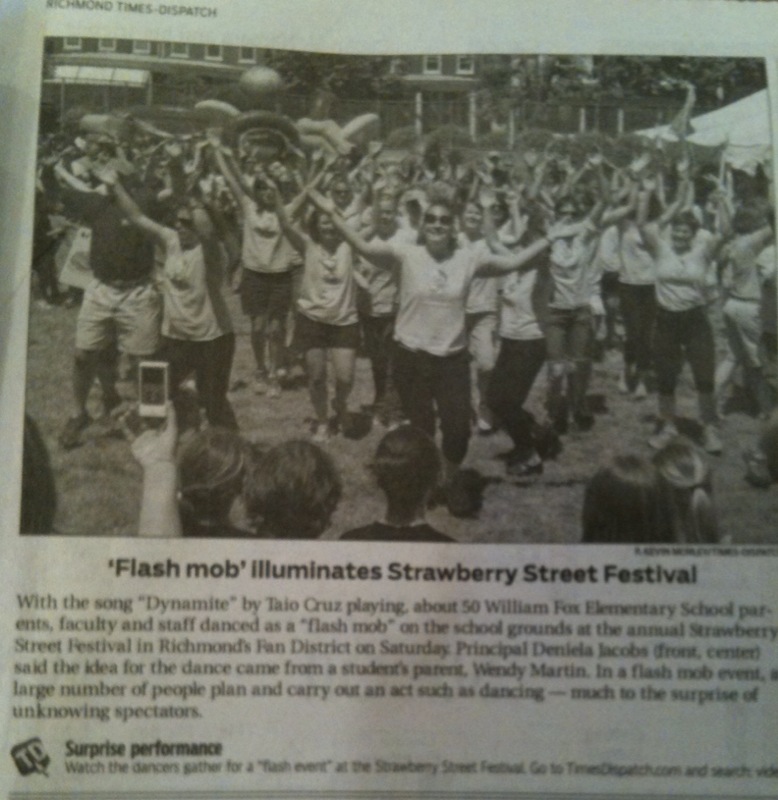
But every now and then, I am given an opportunity and I hesitate.  Suddenly self-conscious, I freeze. This happened a couple of weeks ago when I was invited to come to the top-secret rehearsals to prepare for a flash mob at the Strawberry Street Festival. Wendy Martin, Fox parent, had a vision to engender support for our public schools and wanted me to be a part of it. No way.  What seems whimsical or cool in your twenties and thirties and even forties, is just downright eccentric in your fifties, and decidedly uncool. No. No way. I couldn’t.

But then… I started watching my third graders with their raffle tickets for the Strawberry Street Festival.  They were reluctant. It was hard, they said, to go up to strangers and ask them to buy a ticket.  We talked about all the things the money went for.  Special art programs, classroom programs, trips, tutoring programs, support and appreciation for others… I told them just to start with what they cared about the most and then it wouldn’t be so hard. After a very slow start, they were creeping up to first place in raffle sales.

“We don’t have to be in first place,” I told them, “But I want every one to care enough to participate.  Stand up for the things you care about, and learn to help others care, too.”

There were lots of incentives and they earned all of them. They earned the ring pops.  They earned the class ice cream party. They earned the pizza party. And then it was announced: “And in first place, so far, Mrs. Campbell’s Third Grade.”

Their cheers could be heard all over the school when it was announced. They kept selling. They positioned themselves in coffee shops, and at sporting events, and they went door to door. They talked about how much they loved our school. And they held the number one spot.

I was approached again and again about the flash mob. I shrank back, resisted, and shook my head.  I found out Amelia’s mom was willing to be the first one to start the dancing.  She was that brave. Then I heard that our principal and assistant principal were willing to be in the front row. But I just couldn’t. No.  Not even the back row.

The Raffle Ticket Sale was over. We’d been holding steady in first place, but one of the moms tipped us off that we didn’t finish there; at the last minute another class took the lead. I told my class that now we had even more to cheer about: more money for our school.  We didn’t finish in first place, but we finished strong. And we cheered at the announcement.

I had coached, prodded, pleaded, and cheered as they went out and sold those raffle tickets, because I wanted them to be able to act behalf of something they cared for.  Yes it involved risk of rejection, feeling foolish, and humiliation.

Something you care about is worth that risk, right?  Wait.  What was I saying?

I love how you put yourself out to us and humiliate yourself in front of us, but don’t really care that you did it.

I slinked into the back row of the top-secret rehearsal.  I’d missed the first two.  I caught up as best I could and practiced at home with the video.  Even the rehearsals were scary.

The day came.  Flash Mob.  In the middle of the festival, we broke out in dance to Dynamite by Taio Cruz.  It was a blast. It was so much fun to be with a group of parents, administrators, and teachers who cared that much. I was terrified that I would make mistakes and I did.  But we finished strong.  With jazz hands.  And with signs that read: “Support our community, Public is priceless, Richmond Public Schools”

Too cool for school?  Not me.  This week I learned that it is super cool to care.

Posted in Uncategorized | 13 Comments

On Not Playing School

Strategic planning.  I wasn’t looking forward to it.  Who would?  I imagined a boardroom table and multicolored markers and endless reams of newsprint attached to walls with yellowing tape. I imagined personal agendas silently clashing in the drone of conciliatory consensus-speak. I imagined minefields and potboilers and heavy-handed dream spoilers.  I readied myself. Steadied myself. I stood back and went in.  I just hoped the coffee was good.

What I didn’t imagine was this: that my mind would be changed by other people’s truths; or that my own truth telling could change the way some others thought. Or that hidden agendas would be uncovered and checked at the door (within view); or that a really excellent consultant would help us join hands and dive deeper, beyond murky opinion, and into the clear waters of the absolutes we held in common.

I won’t say the consultant had me at hello, but almost.  He had me at, “It is time to stop playing school.”  Did he say that out loud?  Did he say that too often school is playing school rather than doing the transformational, noble, and extraordinary work of living into our humanity?

I ate my lunch with Melvin Law. Twice. Mr. Law had been chairman of the school board when I first came to Richmond.   I knew he was a chemist. I knew that his sons were all very successful PhD’s and MD’s and were all products of Richmond Public Schools (as are mine).  I knew he was a champion of public education and president of the Richmond Chapter of the NAACP. I knew he was from West Virginia and in my father’s generation.  But this week, over boxed lunches at a table littered with binders, name tags, and pens, he told me what I didn’t know.

He told me that his father had been born in the 1890’s and had about seven days of schooling, none of them consecutive. As a child, his father had worked for wages.  He drove a horse drawn tobacco wagon. Finally he went into the coalmines where he worked as a miner for 47 years.

Mr. Law’s words brought his father’s story to life. I was no longer in a boardroom; I was at a mountain tent revival where his parents met. The years passed in his telling.  Soon I was staring through a screen at the end of a summer day as an encyclopedia salesman bounded up wooden steps to the door.  I heard the early hum of summer bugs and the call of the whippoorwill as he unpacked a set of books.  I saw Melvin’s father run his finger along the spines of the encyclopedias.  I heard him ask the salesman if they would help his son do well.

“If he reads them, they will,” the salesman replied. The transaction was complete and young Melvin Law had a new set of books. “Son. I want you to read these books.  And when I ask you what you’ve read, I want you to be able to tell me.”

The journey began.  Through those books Mr. Law and his father traversed the Panama Canal, trekked across South America, and traveled back in time to the Tigris and Euphrates. His father kept asking, and Melvin kept reading, sharing what he read. They traveled the world together, without leaving the hills of West Virginia.

Years later, Melvin found a pink receipt for the encyclopedias.  His mother’s signature was on it, and underneath it was a large X. When Melvin asked his mother about it, she explained that the X was his father’s mark. His father was illiterate. He had paid four dollars a month for four years and opened up the world to his son.  And his son had opened up the world to him.  This is education.  It is not playing school.

I gained many gifts through my work on the strategic planning team: an abiding respect for all of those involved; and a commitment to hope and to hold possibility for all of our children.  And I left with a story.

There is no frigate like a Book
To take us lands away,
Nor any coursers like a Page
Of prancing poetry – 
This traverse may the poorest take
Without oppress of toll – 
How frugal is the chariot
That bears a human soul.
                  --Emily Dickenson
Posted in Uncategorized | 8 Comments