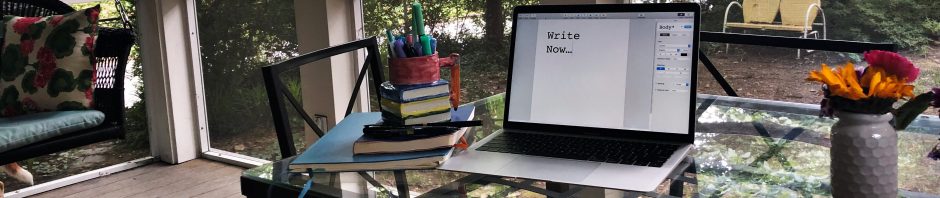
In the Grand “Schema” of Things

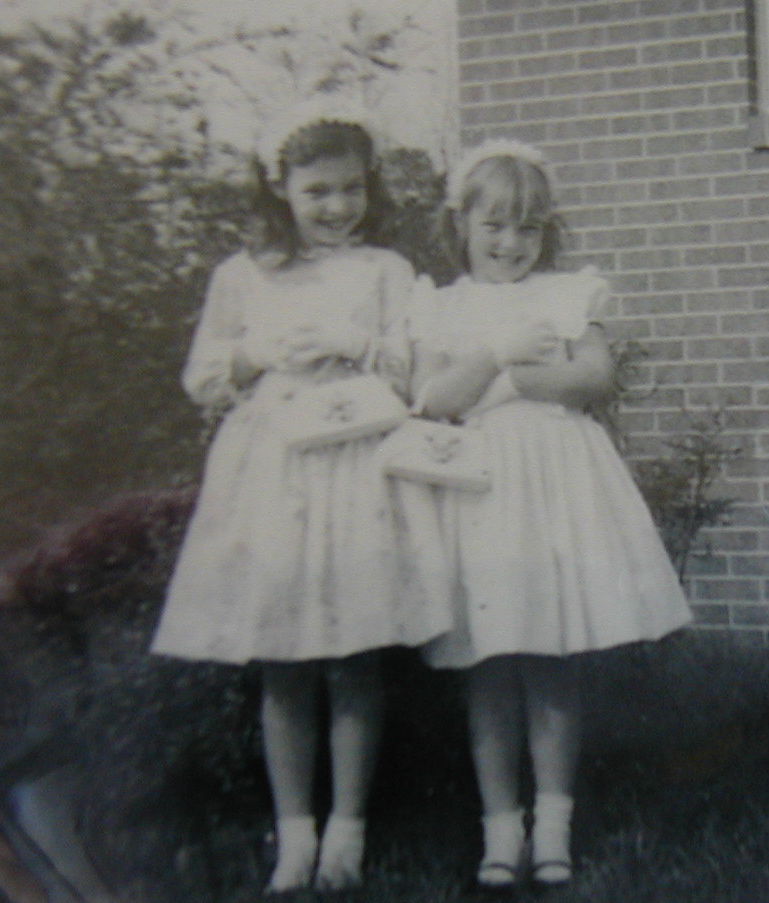
Annie and KatieMy sister and I can read each other’s minds. Really. On Thanksgiving the table was set, the turkey was in the oven, the flowers were in place, and the doorbell was about to ring. I dialed her number in Mexico, put the phone to the CD player and hit ‘play.’ The music was the theme music to the Walton’s Thanksgiving. We squealed as she “heard” what I was feeling in a few bars of this wordless music:

This Thanksgiving is so special…

Matt is safely home from Iraq

He is fine and joyfully reunited with his wife and family.

Celia is ecstatic about having her daddy home.

You should see him with his baby! I wish you were here…

Remember that time?

I miss you.

No one else would have heard all of that that without explanation. This has nothing to do with paranormal experience, but it does have a lot to do with how reading comprehension works. She and I heard the same thing because of our uniquely shared experience. Our young lives were festooned with the same stories, books, and experiences. We have shared “schema.”

Schema comes from a Greek word that means map or plan. The map of our experience is what we bring to the table as readers. When we read we connect the story of our lives with the story set before us. New stories bring old stories to life. In Rm. 204, we are building community and a common canon as we move through carefully chosen children’s literature. In the alchemy of book and experience is reading comprehension.

“Oh, this reminds me of…” is the language of activated schema. It is the language of readers who think while they read. It’s the language of a literate community and it’s the language of connection.

You are strengthening your child’s reading comprehension with every book that you read with him or her and with every experience that you share. This happens as your child reads to younger siblings, too. See 100 Picture Books Every Child Should Know for some good suggestions for this.

The holidays are a great way to see schemata in action. Watch. When you are with your extended family you may feel like you can anticipate what each other is going to say, or recall a hilarious story with just one word. A shared glance might erupt into instant inside joke. This is the joy of family relationship – of being with people who carry the same map. It is the way that you too are a mind reader. And it has a lot to do with how you became a reader.
Posted in Uncategorized | 4 Comments

Jump Right In!

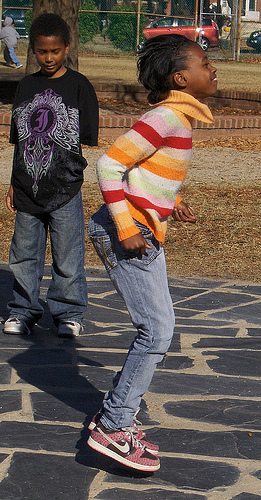
jump inI learned how to “jump in” as a third grader and wondered if my own third graders would thrill to the jump-snap rhythm of shared competence. First, I needed a jump rope. You know the kind: one that is actually made of rope, burned at the ends so that it doesn’t fray, and long enough so that the tallest child (and the teacher,too) can jump. Mr. Greene knew exactly what I was talking about and he found one for me right away. To make it even better, it was bright green.

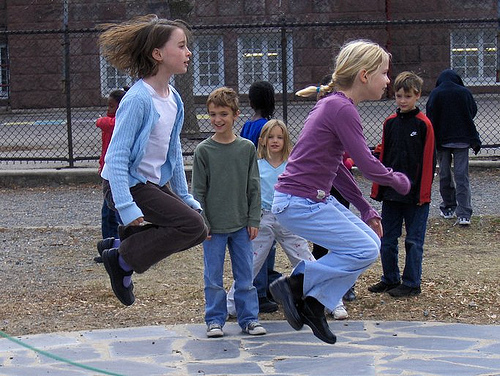
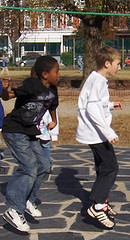
There was curiosity about the jump rope as we walkedjumprightin2 outside. I asked if someone would help me turn and people slowly lined up. “Anyone know how to jump in?” I asked. None. “Anyone know how to jump?” Some. There were good jumpers and some who had never jumped, but they caught on fast. When someone had trouble, I would lay down the rope and offer my hand as we jumped together, transmitting the iambic pentameter of:

And JUMP, and JUMP, and JUMP, and JUMP, and JUMP.

or the more trochaic:

JUMP and, JUMP and, JUMP and, JUMP and, JUMP and…

Cinderella dressed in Yella…

Teddy Bear Teddy Bear Turn around…

jump-right-inAs we jumped I thought about the poetry of it all– how poetry is measured in metrical feet (iambs), and that through the years children have developed their own culture of cadence where street rhymes are also measured by feet, by jumping feet. And yes, jumping rope is bound to add cadence to writing and lay the groundwork for understanding the rhyme and rhythm of poetry that will come later in their academic lives.

Two generations ago teachers and parents were not custodians of street rhymes and jump rope games. They were transmitted spontaneously by the big kids down the street or by friends who lived over on the next block. I am needed here for just a minute– a steward of an endangered game– while I teach children to “jump in” to what is theirs.

School starts at nine o’clock and don’t be late…

JUMP (snap, snap) RIGHT (snap, snap) IN!!!!!!

Iona and Peter Opie wrote in one of their landmark books on the lore and games of children that children are “tradition’s warmest friends.” This is so clear with third graders and I think you will see it as you prepare for Thanksgiving. How can you include your third grader as you pass on a family tradition?

They are ready. They are ready to jump… right… in.


Posted in Uncategorized | 2 Comments

Bluegrass and the Briar Patch

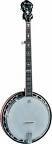
I have a secret: I love bluegrass music. People who know this about me think this must come from my West Virginia roots. The truth is I was exposed to every kind of music except bluegrass by the banjo1musicians on the West Virginia side of my family. When my brother discovered and shared this music with me in the seventies, there was no explaining the native feel of fiddle strings and banjo strings on these heart strings of mine.

Bluegrass may have had its start in the Appalachian Mountains, but the roots of its instruments are in the hybrid vigor of merging cultures. The fiddle had its start in the highlands of Scotland. The banjo began much earlier in Africa– and very likely in Mali–as a stringed gourd. I didn’t know any of this when my brother first introduced bluegrass to me– it was just toe-tapping, foot-stomping, hand-clapping joy.

We have been listening to the music of Mali as part of our study of the Empire of Mali in Social Studies; the ancestry of banjo music is right there. In Language Arts we’ve been studying Trickster Tales. Like the banjo, these stories have their roots in West Africa. The protagonist in a trickster tale (usually a spider, rabbit, or tortoise) is a risk taker, a survivor, and smart. These stories do not end with a moral, but they uphold core values: speak to people, don’t take more than your share, and don’t think you are bigger than you are. The protagonist is only outsmarted if he flies in the face of one of these values.

Music, stories, and values found their way to North America in the hearts of people– people who gave up everything and chose to come, and people who lost everything and were forced to come. The stories came with people who were not allowed to bring anything with them. They have morphed over time to fit the region: Brother Rabbit becomes Brer Rabbit, the African grassland becomes the meadow, and the underbrush becomes the briar patch. The values of risk, survival, and resourcefulness are more important than ever.

Stories and music are part of the intangible gift of diversity in our culture.

I bet you wish you could hear a trickster tale. I’m guessing your child will be more than willing to tell you one in the next week or two. Lean forward and be ready to listen. That’s a gift, too.

Posted in Uncategorized | 3 Comments

Yes, Definitely!

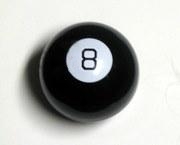
8_ball_faceDo you remember the Magic Eight Ball toy? I think those are still around. You ask the ball a question and then shake it–shake, shake, shake. An answer appears in a tiny triangular window. I remember asking the Eight Ball if it was going to snow when I was twelve years old; I had a big math test and a snow day would have been more than serendipitous. I shook it over and over and got a variety of answers:

Maybe

My reply is no.

The outlook is not good.

Undecided

No Chance

But I kept shaking and I shook it until I got the answer I wanted:

Yes, definitely

It did NOT snow and I was not spared the humiliation of a test I was not ready for.

Although I learned then not to rely on a Magic Eight Ball for information, I sometimes think I sound like one in the classroom. In Writers Workshop, children raise their hands knowing that I will have a word or a strategy to get them started… something just for them. It might be a quick phrase that sums up what we’ve learned in a lesson together. By now I know them as writers and we have discussed many, many strategies that writers use.

Try a time line,” I whisper to one girl.

“Stick a star next to the event that has the most energy for you. And that’s what you should write about,” I explain to another.

“What do you mean all you did was jump on a trampoline? I would love to do that. Make me feel like I was there– show don’t tell. Write what you were thinking while you were climbing on that trampoline.”

“You saw Dave Matthews??? Make a movie in your mind of that– slow it down. Now try writing about it.”

I move to another raised hand. “Stuck, James?” I nod sympathetically. “That happens to every writer. Try making a list. Maybe you can even use the list in your writing. Remember how Ann Cameron did that in The Stories Juian Tells. She did that with the vegetables.” I do a quick list lesson for the class with Ann Cameron’s novel in my hand. Ravenel adds that she has done that with her father when they have written poetry. All of the sudden we are rearranging words according to sound and syllable.

Later in the morning, James’ hand is in air. I look at his first sentence: “Hershey Bars, Crunch Bars, Reeses, and Twix–I ate a lot of candy.” With James’ permission, I read it to the class. James gives me a winning smile as I show him that with a few well-chosen words he has written a poem and a lead sentence, all in one.

A strategy shorthand emerges over time. This shorthand is made of tips that could fit tightly in a tiny triangular window, but this Eight Ball sized advice is generated child by child, not randomly. Good writing is not left to chance. We’ve just finished the first nine weeks. Children know how to tap into the story in and around them. I can’t wait to see what happens next. Will they continue to grow as readers, writers, and thinkers?

Yes, definitely.

Posted in Uncategorized | 9 Comments

Red, White, and Blue

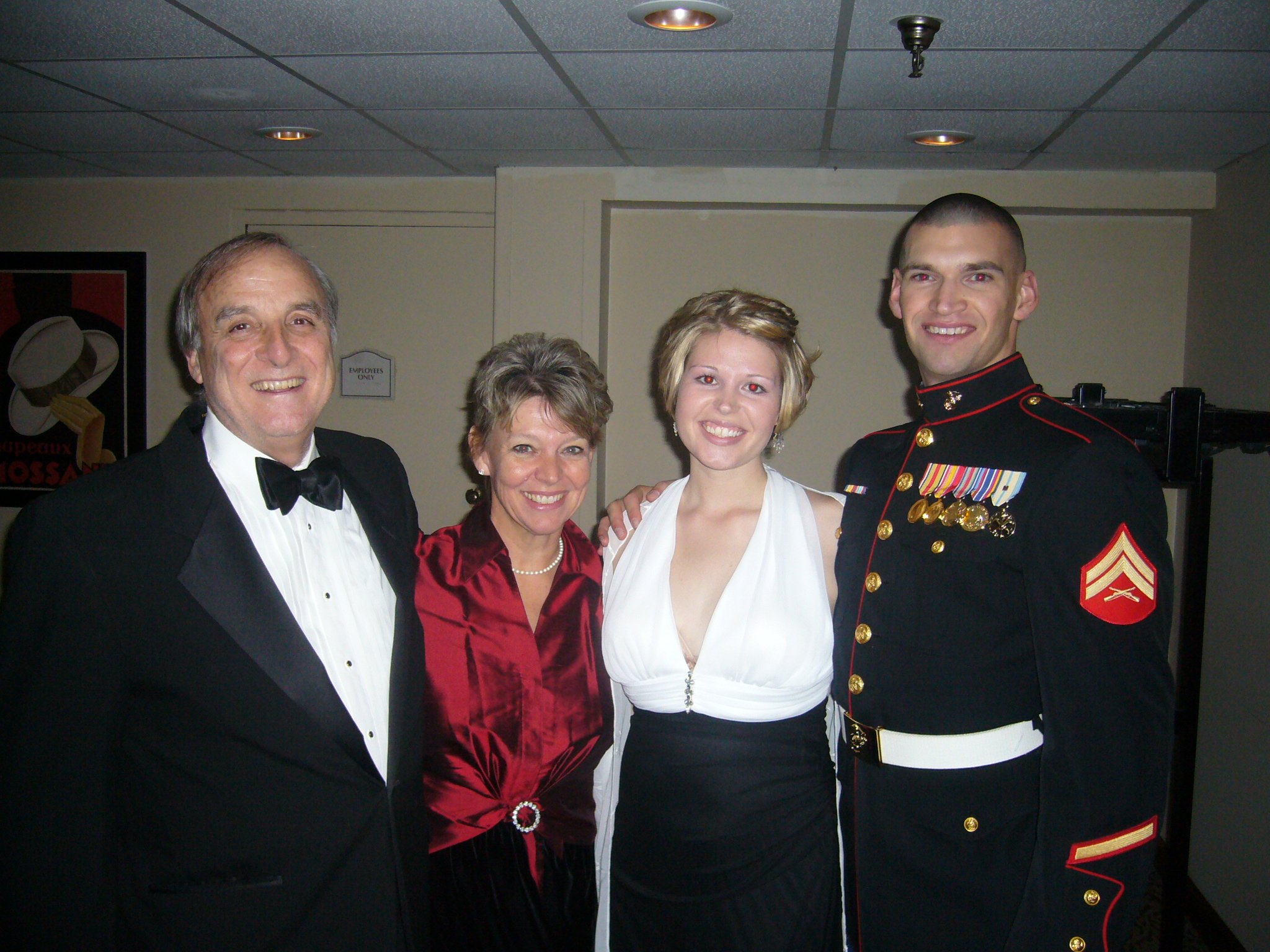
I can breathe again. My son left Iraq early this morning,

This summer (thanks to the Fox PTA) I attended the July Writing Institute at Columbia Teachers College. This program is the root of the reading/writing workshop you see in Room 204. We talked about our “writing territories.” Our writing territories are the topics in our lives that matter the most to us– the things we know about. I knew what mattered to me: my son was a Marine serving in Iraq. In New York this summer, I tried to turn this writing territory into words, but the words would not come.

In the middle of this experience I walked past the bust of John Dewey (resisting the urge to nod) to check my email in the library. There was an email from my son. He’d attached his writing–something he’d written on the Fourth of July:

I sang to myself the Star-Spangled Banner today as I flew over Iraq in a V-22 Osprey with an American flag hoisted at the rear of the bird. “This is how I’m spending my Fourth of July,” I thought. “No fireworks, no cookouts, no baseball…no independence.”

It’s not about independence, though, in the strictest sense of the word. I’ve always preferred to think of the holiday as the Fourth of July rather than Independence Day, because there was so much more taking place on the Fourth of July, 1776, in Philadelphia than the mere transition from colony to sovereign nation. Today we celebrate the spirit that led those men to sign the Declaration, the inspiration reflected in its words, the honor and courage exhibited by the Founding Fathers to which we all should aspire.

O say, does that Star-Spangled Banner yet wave o’er the land of the free and the home of the brave? The question, in my mind, is not in the first clause, but in the second. Have we kept close the touchstone of the founding principles, free thinking, the equal stature of all men, the rule of law, the courage to stand for what is right? Have we ensured every day that our neighbors live free of fear, free of oppression, free to choose the lives that they live? Have we been brave on behalf of those who are weak to secure the most basic blessings of liberty for all people?

There is no doubt that our Flag flies high atop every statehouse, schoolhouse and courthouse; in front of our homes, at embassies in the nations of the world, and anywhere our troops defend it. It is the second clause to which we must attend.

And so I recall that over six years ago I gave of myself hopefully for the benefit of others, but not knowing of whom. I gave up birthdays, anniversaries, holidays and many memories. I did so gladly, and for good reason. Defense of freedom is not an empty phrase, nor, more importantly, is it an idea from which any of us is exempt. Our Founding Fathers were convicted to fight for a greater America. That is a fight which will never be won, and that is a conviction which every one of us must carry on.

I may not be free to spend this day as I wish, where I wish, or with whom I wish. But I can d*** sure remember why I am here. And I can celebrate.

Finally, there were words. They were his words. It was his story to tell– his writing territory.

We have so much to be thankful for. His four year old daughter will have her daddy back. He will meet his six month old baby for the first time. His wonderful wife will go out to California this week to welcome him home. We’ve all been waiting… and now we can celebrate. We can breathe.

Posted in Uncategorized | 3 Comments

It’s Catching

I’ve known for a long time that good language is better caught than taught. A sprinkling won’t work–nothing but full immersion will do! Throughout the year we will read (and write) information books, folktales, biographies, novels, and poetry. To make sure my children get the language exposure they need I rely on heavily on picture books.

Why picture books in the third grade? The language of picture books is often richer than the language found in chapter books written for children this age. The picture books I use tend to be written at a higher reading level, but the listening level is just right. It is the listener that is learning to write. I’ve asked these third graders to start listening to these read-alouds as writers. It is listening that sets the metronome of our cadence–the “fingerprints” of our writing. Our voice.

As I read aloud in writing workshop, I share with my students that I am introducing them to my writing teachers. This week Dav Pilkey (Paperboy), Cynthia Rylant (The Relatives Came), and Ann Cameron (The Stories Julian Tells) became our teachers and showed us how to move time along without the repetition of “then and then and then and then….” Through our listening, we became writing students. Together we listened and shared what we heard. Idea was built on idea. I reached for my writer’s notebook because as my students spoke, I was listening to writers as a writer.

Good language is better caught than taught, but it still needs to be taught. We learn as listeners, but we also learn as readers. Children need direct instruction on the conventions of writing, but here, too, authors are our teachers. After we finished Vacation Under the Volcano by Mary Pope Osborne last week, we investigated how quotation marks and dialogue tags are used. As we encounter punctuation in our reading and writing we listen for what sounds right. Even as we read, we are unconsciously “listening.”

“I’m noticing,” said a gentle and reflective girl with her hand in the air, “I’m noticing that in both of these chapters Julian told a lie.”

“Yes!” said a boy. “The title is The Stories Julian Tells. At first we thought that meant stories, but maybe it means lies.”

“Maybe it means both,” someone added. “Maybe the author did that on purpose.

“It is like Paperboy,” added another girl, “At first I thought Paperboy was about a boy made out of paper.”

I remind them that sometimes authors make a title ambiguous on purpose. It keeps us wondering. Wondering is what makes reading and writing work.

Wondering is what makes teaching work, too. It’s catching.

Posted in Uncategorized | 1 Comment

Oh, Look!

Lots of parents call out morning reminders as their children leave car doors or screen doors slamming behind them. “Pay attention!” they call out. It is the best writing advice there is. “Take notes!” my father would bark as we untangled ourselves and tumbled out of his VW Bug just as the bell was about to ring. It never occurred to me that he was talking about school. And I really don’t think he was. To me he sounded just like Perry White, Lois Lane’s Editor at the Daily Planet. “Take notes and bring back some stories.” I learned that paying attention is a way of harvesting the details of the day into a story that I could unfold and tell later. Details make up the story we see and carefully chosen words make up the story we tell. I teach third graders to look at the world with the eyes of a writer. “Look” is one of the first words we learn to read, but it takes a lifetime of practice to actually do it. This week, we will talk about what it means to look, read, and listen like a writer. We start by paying attention and by willing to be astonished by what we see.

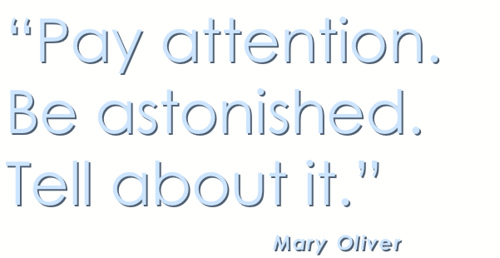
Last summer, at Lake Chautauqua, a friend pressed a scrap of paper into my hands. He had been reading the poems of Mary Oliver and had written down a few of her words for me: “Pay attention, be astonished, tell about it.” I love those words and keep them close at hand. They can be summed up simply, “Oh, look!”

Posted in Uncategorized | 3 Comments

The Way I See It

Teachers are paid to know the answers in the back of the book, but the questions are what keep me interested. How do we teach children point of view? I pondered this as I looked at the world through plate glass in the Robinson Street Starbucks last week. I absentmindedly turned my coffee cup to warm my hands and as I did, I noticed “The Way I See It.” I love reading these perspectives scrunched into words to fit on the back of a coffee cup. I especially loved reading this one:

The way I see it
Isn’t necessarily
The way you see it
Or the way it is
Or ought to be
What’s more important
Is that we’re all
Looking for it
And a way to see it

–Desi Di Nardo
Author and Poet
she lives in Toronto, Canada

One of the things I have loved about having Abbie Radcliffe as a student teacher is “looking” with her. For six weeks we have put our heads together and looked. We’ve looked at children, teaching, writing, reading, and so much more. I value her insight, perspective, teaching talent, and her warmth with children. I am grateful to her for her many contributions to our classroom. This is Abbie’s last week. We will miss her in Room 204! That’s the way I see it. Good luck, Ms. Radcliffe!

Posted in Uncategorized | 4 Comments

Once.

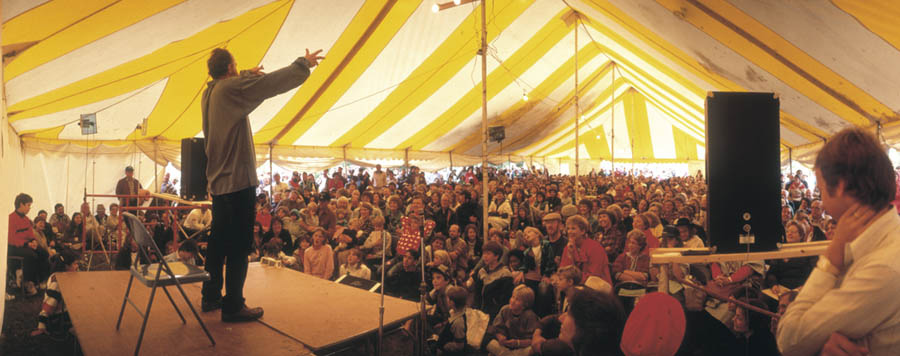
On this crisp autumnal Sunday morning, I am at the National Storytelling Festival in the mountains of Tennessee. I will bring back new stories to spark the imagination of my own young tellers.

In a bag of teaching tricks, there is nothing more powerful than the ability to tell a story. “Once upon a time” stirs metaphor, word, and image into meaning. Most importantly, when I tell a story, I am teaching children about reading and writing in their native language.

Have you ever listened closely to children tell stories? They often begin with a question–or words and commands that end with a question mark. I think eight year olds invented up-speak. “Know what?” they will ask. Or “Guess what?” More often than not, they simply begin with, “Once?” They are joining the oldest storytelling tradition in the world: Call and Response. What they are really asking is, “Are you listening?” And we, fixing our eyes on the teller, lean forward, “We are listening.” This week I will be working with young writers on seeing story in the “small moment.” This is challenging work, but it is very rewarding. As we talk it through, I will hear it over and over: “Once?”

I am listening.

Posted in Uncategorized | 3 Comments

What is this Really About?

Reading is a conversation. A book on the shelf is dormant, but in the hands of a reader it springs to life. I’ve seen books that I’ve known for years suddenly take a class (and me) by storm. I gave up on discussion guides long ago, knowing that where we really want to be is just off the edge of the map. Trusting that children have interesting and insightful things to say, I start out with one of two very simple questions: “So, what do you think?” or “What is this really about?”

We read lots of different ways in Room 204. Every week we read a selection in the student anthology (Houghton Mifflin). The children have a choice in how they respond to these stories. This weekly selection is important in that it provides the context for skills and strategies, but it is only one small piece of the reading we do. Children choose their own books for independent reading. As the year progresses they become more and more accountable for this reading through their response journals and through conferences with me. I also read books aloud as the basis for discussions about what good readers (and writers) think about and do. These discussions have enriched my own reading immeasurably!

In the few minutes between math and lunch, we read a chapter of a novel together. Everybody has his or her own copy. Next to me, as we read, is a hand painted ceramic mug given to me by a former class. The words “Friends for life” are painted inside the rim. The mug holds twenty-two sticks and on each stick is written the name of a student. As I read from the novel, I pull a name from the mug, and that child takes over reading for a few sentences. I alternate reading with the children whose names I randomly pull. This not only provides strong support for reading with fluency and expression, it provides a strong community experience of a book. We just finished The Bears of Hemlock Mountain by Alice Dalgliesh. After a pause to acknowledge that we’d just finished a book, I began our discussion by asking what the book was really about. “Growing Up,” said one third-grader. “Finding adventure,” said another. “Testing out what other people say,” another added. That is all true. What a wonderful springboard. This simple short novel invited us into a conversation that lasts a lifetime. That is what reading is. What are you reading?

Posted in Uncategorized | 4 Comments