My Reading Life

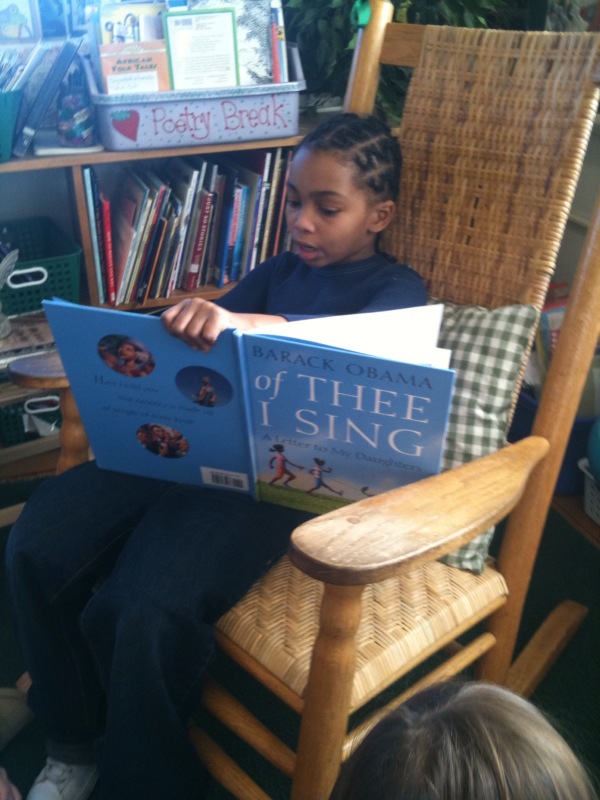
On my bedside table is a stack of books, and at the top of the stack is Pat Conroy’s My Reading Life.  It is rich, beautiful, and evocative. Just like a reading life should be.

In a series of essays, Conroy honors authors and librarians and poets and teachers and, most importantly, the books that shaped his life.  Books do that.

The book is the memoir of a reader and it  sparks reflection.   My own reading life began with the musical tones of my mother’s joy-embracing “happily-ever-after” cadence, mingled with those of my father’s sonorous and sardonic “well-what-did-they-expect” wit.

I Could Have Seen That One Coming” might have been the title of every story my father read or told to us: Well of COURSE the wolf rushed ahead to Red’s Granny’s house; and Hansel and Gretel were held hostage by a witch; and Tom Sawyer got to know the school master’s switch, and Wendy ended up tied to the pirates’ mast. What did you expect?

“See? I knew that would happen,” he would say with a mix of pathos and judgment.

When I was six, I was taken to the Dolly Madison Library to get my own library card. I was allowed to choose my own books.   Books came in the mail no matter where we lived and one of my parents read to us almost every night.

School was another story. Reading meant work and workbooks. Or it meant reading aloud in a circle of small wooden chairs where a teacher nodded approvingly as we made the words on the page jump to life. Or it meant working our way through a box of color coded cards with passages and questions.

These days when I read that elementary schools have declined, I want to raise my hand and say, “Wait a minute… they weren’t so great back then. I was there.”

I had great English teachers in high school. We were given choice, time to read, and a place to explore and deepen our thinking about books with others. We were expected to think, discuss, and write intelligently. I made my way through classics, contemporary fiction, plays, and poetry.  I read books I loved and books I didn’t.

Mixed in with all those authors was Pat Conroy.  When I was a senior in high school, I read his teaching memoir, The Water is Wide. I loved it, but I had no idea that I would one day teach.

Now I have spent well over half my life inviting children to develop their own rich reading lives with intention and purpose… I guess I could have seen that one coming.

Posted in Uncategorized | 12 Comments

Discovering Columbus

When I was a little girl, we traveled on ocean liners.  They don’t exist anymore.  In a changing world, some things change and some things vanish.  As we left the New York City pier, the band played marches on the deck with the low toned blast of the steamship’s stack in the background. We threw streamers, blew kisses, and in a storm of confetti, waved to family and friends who came to see us off.

Ships with names like the S.S independence, the S.S. America, and the S.S. United States would majestically carry us to my father’s next post, and to yet another continent that would become our home. I can still smell the mix of wax, varnish, and sea: it is the scent of anticipation. I can feel the sun’s heat mingled with the shock of the North Atlantic’s cold air.  I can hear the onomatopoeic call and response of ping pong that echoed behind me as I stared out at the vast expanse of sea… wondering and wondering how someone figured out there was something on the other side of the world.

I must have wondered out loud, because it was it was in one of those moments that I first heard about Christopher Columbus.

My father told me that in 1492, most people believed that the world was flat, but Columbus set out to prove once and for all that it was not.  And in this noble, brave, and daring venture, he discovered America.

I couldn’t have known that one day I would teach about Columbus (and other European explorers) to third graders.  Or that I would find the story increasingly complicated to teach:

The Third grade student will describe the accomplishments and successes of Christopher Columbus, Juan Ponce de Léon, and Jacques Cartier.

The European Explorers were the rock stars of the Renaissance; they lived in a perfect storm of invention. They were alchemists of circumstance and combined the miracles at hand (the printing press, gunpowder, and the compass) into hidden powers that enabled them to sail away from the present and into the future. Innovative.

They scoffed at the idea that dragons lurked at the edge of the map.  They were brave and daring risk takers who were willing to cross the boundaries that guarded the known from the unknown. They knew that the fiercest dragon did not lurk on the edge of the map, but rather in the hearts of those chained by fear and superstition.  They would break those chains. Daring.

Europe was in trouble.  Hunger. Disease. Crowded ports and struggling towns made life excruciating for many.  A few daring men set out to make the world a bigger place.

The doors of the east that led to trade and spices and salt and riches and silk were slamming shut.  Powerful sultans, emperors and khans were closing the land routes.  Sea routes had to be established.  Columbus figured that if the world was round (and he knew if was), he would sail west and find the back door to the east.  Noble.

On October 12, 1492 Christopher Columbus made landfall.  He thought he’d done it…. He thought he was in India, so he named the native people Indians.  He wasn’t in India, but he wasn’t in North America either.  He landed in San Salvador in the Bahamas. Surely he was mystified that that there were no great ports of trade.  He had read Marco Polo’s journals and must have expected the air to be aromatic with spice and the docks heavy-laden with gold, silks, and riches. Mistaken.

He’d brought mirrors and bells to trade: trinkets to entice and inspire trade relationships.  And he brought an invisible passenger with him: disease. Tragic.

He claimed land that was not his to claim and in his desperation for gold enslaved the native people. Wrong.

Teaching history is big and beautiful and inspiring and antagonizing and stirring and complicated and heartbreaking… all at once.  It cannot be reduced to “accomplishments and successes,” anymore than it can be reduced to “heroes and villains.”

The first lesson I learned about history, I learned on the high seas long ago: History should be told.  I’ve learned to search hard for history’s ghostwriter: Point of View. I am constantly learning to sand down the narrative to central truths with out stripping it of hope. History helps us see the present:  avarice and greed were threats in the age of exploration; the same is true in the age of globalization. Exploring explorers gives us the chance to discover something new.  Again and again.

Posted in Uncategorized | 6 Comments

It’s Big

This past Friday morning, I couldn’t figure out why people were bundled up in Steelers hats and Packers scarves on our 6:30 am flight. Then I remembered: this was Super Bowl weekend.  The plane was bound for Dallas where we would change planes for Phoenix.  And then  I remembered this: the Super Bowl was being held in Dallas. It was a festive flight with friendly rivalries and every one was in a great mood. Time flew and suddenly it was time to land; we looked out the window and were very surprised to see Dallas covered with snow. We cheerfully waved good-bye to the couple who had won an all expenses paid trip to the Super Bowl in the Virginia lottery.

It didn’t take us long to figure  out our morning flight to Phoenix was canceled. That was just one of over seven hundred flights that would be canceled before we left that night.  We were put on stand-by, so… we stood by.

We took our place in the long line of the hopeful, all wearing matching expressions of expectation—would we be picked for the flight? A toddler wandered over to us as his mother searched the diaper bag. He took our hands and we walked Justin back over to his mother.  Their names had been called.  It was a lottery of our own and one that we didn’t win.  We were told we would be put on the next flight to Phoenix.

At concourse A, I watched the Egypt story unfold on CNN. I watched as an Egyptian family gathered in front of the screen. I looked at their faces, expecting to see terror in the risk. I saw joy in the hope for change.

I sat down next to a woman named Katherine.  Her husband’s college buddies were descending on their house in Dallas for the Super Bowl and she was getting out of town with her first baby–four weeks old.  She had made sure the plane was there and ready to leave before she got out of the car to fly to Phoenix to visit her parents,  but she hadn’t thought to ask if there was a crew. Nor had we.  They were short a flight attendant.  We all waited. Together.

Eventually, a flight attendant was found and we were able to board the plane.  The captain came on and said that several marines aboard the flight were on their way home from Iraq.  He said he was proud of them and that he too had been a marine. He asked that we give them a round of applause.  I clapped for them and thought of the times that my own son had been coming home from Iraq as a marine.  At the end of the flight I saw the captain shaking the hand of the marine who’d been sitting in front of us. I overheard him say, “Go home and enjoy your family.”

The next morning in Phoenix we met our new little nephew for the first time.  Then we drove across the desert to the Grand Canyon. When we got there in the afternoon, my husband and I hiked out to a point to watch the sunset’s majestic work on rock faces.  My mind reached for words, but there was only one: big.  After dinner, before we went to bed, we stood on our porch and stared up at the sky.  The constellations and scattered specks of light flickered against the vast black night.  Big.

Yesterday morning we woke before dawn and watched the first  pink jagged streak of the sunlight break into day across the canyon.  Big.

Anonymous has left a trail of words behind her that appear like jet stream in the sky right when a moment is too big for your own words. My mind tried to make out the words… what were they?  Moments. Life. Breath.

This weekend has been about bigness: bigness in winning tickets, new babies, hope. I saw bigness in the landscape: Canyons. Desert. Sky. I saw bigness in a narrative sweep of story that enfolds all of us: the Super Bowl, snowstorms, change, homecomings, family, beauty. Throughout the weekend, I’ve seen bigness shaken out in tiny moments.

Ah there it is….

“Life is not measured in the breaths you take, life is measured in the moments that take your breath away.”   Anonymous

It is what I learn again and again.  Stay awake.  Pay attention.  Let life take your breath away.  And this morning I’ll go teach this to my third grade graders,  again: What we look for as writers is in the small moments that matter.  It’s big.

Posted in Uncategorized | 11 Comments

Beloved Community

Sometimes people look at my third grade class and wonder how we got this way. They smile and shake their heads. It doesn’t take much for the class to break into spontaneous song or into a combustion of creative questions and ideas and expression. I stay amazed. We resolve things that come up and stick together when things go down. Our ideas come in storms, and we share the results in a sea of calm. We are often surprised when the bell rings at the end of the day. This may sound ideal, but it isn’t easy to manage: we are a team with many captains.  When people ask me how we got this way, I know what they really want to know is this:  How did we, as a third grade class, become a community?

“How do you teach that?” they want to know. And the answer is this: you can’t.  You can’t teach community, you have to build it.  And you can’t build community without learning love, trust, kindness, responsibility, forgiveness, humor, honor, fairness, and relationship.  You can’t learn any of this without honest conversation and you can’t learn honest conversation without an expanding and deep vocabulary.

We begin at the beginning. In a summer letter, I ask children to bring a riddle to share on the first day of school.  The riddles help children find their voice in the group as we begin to learn the difference between laughing together and laughing at each other.

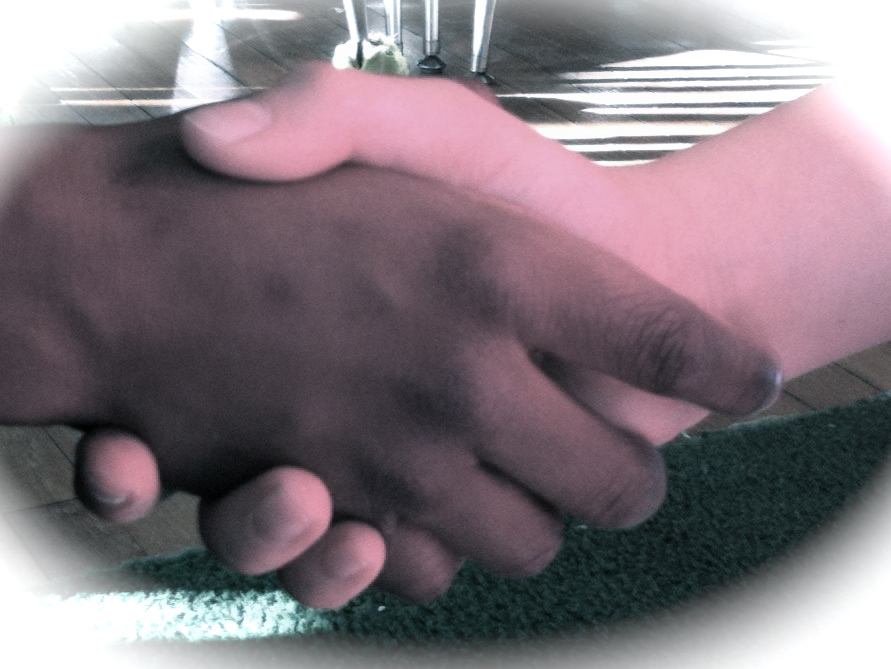
We spend the first nine weeks learning how to greet one another with a handshake and eye contact. We learn how to honor questions that have more than one right answer, and how to shift from one point of view to the other.  We learn how to apologize and how to forgive. We learn how to listen and we learn how to share. We learn that singing in parts is a way to make music together. We play games and learn that it is okay not to win every time, and that we can celebrate the wins of others.

“How do you find the time?” people ask. My answer is that it is too costly not to teach these things.  Community builds the academic life and deepens inquiry. I try to communicate that we have all of the time in the world for the exchange of deepening ideas and simultaneously that there is urgency to learning.  And there is.  Pacing charts, state standards, and mandated tests are real.  We try to keep it real by making what we learn meaningful.  State mandates are serious.  We take them seriously by taking our world seriously. The standards of learning (SOLs) are presented in chunks and pieces, but that doesn’t mean they should be taught that way.

Third graders in the state of Virginia learn about Rosa Parks and Thurgood Marshall and Martin Luther King, Jr.   This is a rich opportunity.  We’ve been talking about slavery and segregation and injustice. We’ve been talking about how we, all of us together, can bring things around right and how to fight ignorance, indifference, and bitterness.  Dr. King called his vision for this the Beloved Community.  It is a concept that takes time and heart to understand, but we are getting it. After all, we’ve been working on it since September.  It takes time to build a better world.

Posted in Uncategorized | 7 Comments

Dream Work

Never underestimate the power of a dream.  Seeds are sown and dreams grown in the moments that seem the most mundane. We don’t always choose what we remember or what becomes important or what shapes us as people. Random moments are frozen like black and white stills and tilled deep into memory. And then they become part of who we are.

A moment:  It is August of 1963 in Williamsburg, Virginia.  I am eight years old and I am getting ready to start the third grade. We have already made the trip to Casey’s department store and my closet smells like brand new shoes. My parents are watching something on television. First one, then the other, tells me to sit down and watch with them.  I sit, but I am restless. The black and white screen flickers news-like seriousness. I am thinking about riding my bike to the pool for a last chance to earn the red ankle tag that will allow me to swim in the deep end even when my parents aren’t there.

I didn’t want to watch the news. I wasn’t interested in current events. And I didn’t pay much attention to what was going on in the world around me.  And yet, it would be a moment that that would shape my life.

I didn’t know the man who was giving the speech, but he said he had four little children… just like our family.  The man had a dream and my parents had tears in their eyes. The moment was important enough that they wanted me to be a part of it. They wanted the dream to be a part of me. School started and I went back to my all-white school.  The speech that had been so important to my parents was never mentioned.  Silence.

This past Friday (Lee Jackson Day in Virginia) I taught my third graders about the man with the dream.  They wanted to know if I was living back then (Yes).  They wanted to know if Room 204 had been white or black during segregation (White).

This dream cannot be taught with silence.  Silence is an easy consort to idle hatred and indifference — the very enemies of the dream.  This dream can only be taught with conversation.  A girl wrote me a note after the conversation: “Dream work is team work.”  I love that and it’s true.

I don’t know if my students will remember a word of what I taught them on Friday. I hope they will remember that they had a teacher who knew it was important to talk about the man with the dream. What I really want them to know is this: Bold and courageous love is the dream. Bold and courageous love is the message. Bold and courageous love made a difference. Bold and courageous love was the man: Martin Luther King, Jr.

Dreams

Hold fast to dreams
For if dreams die
Life is a broken-winged bird
That cannot fly.
Hold fast to dreams
For when dreams go
Life is a barren field
Frozen with snow.

–Langston Hughes

Posted in Uncategorized | Tagged , , , | 7 Comments

Finish Well

If you are a writer, artist, designer, architect, cook, or creative all-purpose person, you know all about process. You know that your process is unique and essential to the creative life.

If you watch reruns, check out Carrie Bradshaw’s writing process.  Seriously.  She ruminates.  She ponders.  She obsesses.  She wonders.  It might be about Mr. Big or shoes or negotiating life and relationships in New York City— but she digs and spins and drills until she hits it: the first sentence.  Then she opens up her laptop and starts to type. The camera zooms in on the screen. Tap. Tap-tap. Tap. Tap-tap.  We watch as the first sentence is crafted, character-by-character and word-by-word. If the sentence turns out to be a false start, we are witness to a swift single revision. We hear Carrie’s voiceover as she writes her life. That’s process.

Carrie Bradshaw and I live in different shoes.  We have different approaches to life, but we each have our own process.  Mine involves Sunday mornings and coffee and headphones and gospel bluegrass in the breaking pink-streaked blue of predawn light. I clean off my desk and make a mess and clean it up again. I write my life in the break of a brand new day and in the twilight of a week just passed.  Process.

If you are a teacher you know all about THE writing process: the march from start to finish –planning, drafting, revising, editing, publishing– no matter how many writers are lost along the way. I am much more interested helping children learn THEIR process than I am in teaching THE process. And I’ve never lost a writer yet.

In September, young third graders are pretty sure they know how to finish the job. They know how to fill a prescribed amount of space, put the pencil down, and announce, “I’m done.”  My first task as teacher is to gently guide the young writer away from the allure of “done!”  Writers need to know how to get ideas and see details.  Writers need to know how to get started and how to stick with it. Writers need to learn to hear cadence in craft.

Writers need to be willing to get lost along the way and learn how to find their way back.

And then, finally, writers need to know how to finish their work. That’s where we are now… we are learning the beauty of finish: we are learning to remove flaws and add detail. Finished work has permanence and integrity. We are honing our revision skills and playing with ways to publish. This week we spent time reading over our notebooks and deciding what to take forward—what we want to finish. I leaned in and listened as young writers talked this part of the process through.

“Oh, I love this one — it has such good words!”

“This brings the feelings back!”

“I think others would like this.”

These are great guidelines for any writer! We’ve learned the secret of getting done.  It is this: just get started. And begin well. Live into your work. And then finish the job. Without finish there is no “done.”

Posted in Uncategorized | 14 Comments

Remember December (Again)

This entry is from last December, but says what I want to say this week.  Happy Holidays!  AC

Many mornings I go to Starbucks on the corner of Stuart and Robinson in the Fan.  It is a quick walk to and from school and a quick start to a good day.  The December decorations there include a big burgundy banner with these words in white:

“ I wish grown-ups could remember being kids.”

I smile at this.  My third graders are happy to help me remember  December.  When I was in third grade my mother placed lemons, cloves, yellow tulle, and white satin ribbon in the center of the kitchen table.   She explained to my brothers and sister and me that we would make pomanders for our teachers.  It was hard.  My fingers hurt from poking in the cloves and it took a long time.  I’m sure I complained some.  I know I may have wanted to stop. I remember pausing and staring out the kitchen window at the York River.

I often wonder why that is what I remember: sitting at that table with my hands sticky with lemon juice and my fingers sore from the sharp cloves, citrus in the air, looking out beyond the woods at the river.  I didn’t even know what a pomander was!  And I could not possibly have known… This.  This is a Christmas memory.

Or this…  I sat on a kitchen stool next to my grandmother in her pristine kitchen in West Virginia. With a cold stainless steel knife I learned how to frost shortbread Christmas Trees cookies with pale green icing.  There wasn’t even a whisper of, “This is what you’ll always love about Christmas and this is what you’ll share with granddaughters.” Yet the memory has echoed through all these years.

The burgundy banner is a reminder in this season of hope and miracles.  As I help my students name what is special about the holidays, not one child has mentioned what they want for Christmas or Hanukah. It is not what they talk about.  They talk about making cookies, reading holiday books to younger siblings and cousins, setting the table, and helping with decorations.  The task of getting ready for something special is the most special of tasks.  What do children want?  Robinson and Staeheli in Unplugging the Christmas Tree say children want and need “a relaxed and loving time with family; realistic expectations about gifts; an evenly paced holiday season; and reliable family traditions.”

Getting ready for something sacred is sacred, especially if it is done together.  Now it’s your turn to remember.  Then share what you remember with your child. Get ready. Together.

Posted in Uncategorized | 3 Comments

Tidings of Joy

I was checking math problems and a child came up and put her arms around my shoulders. She fixed her sparkly eyes on mine and said, “Mrs. Campbell, I have a question for you. Were you as joyful at my age as you are now?”

I loved the question. I know that children wonder if they will still be joyful when they grow up, but I have never had a child work backwards and wonder if a joyful grown-up morphed from a once-upon-a-time joyful child.

This week we flip our calendars to December and enter a season marked by joy.  But here is the weird thing… when you start paying attention to this season, you find the implication that joy is something you can buy or wrap or give.  Count the times the word joy is used in a holiday commercial and pay attention to the context.  You’ll be amazed at what you hear and see. Tonight I heard voiceover announcement: “Savings that give unstoppable joy…”  Unstoppable joy?  Really?

How does joy work? I know how it works in the classroom. It works through shared trust, shared traditions, shared jokes, shared music, shared expectations and shared experiences of singing, dancing, learning, literature, inquiry and discovery. Joy is lived together; everyone’s gift of self counts and is honored and respected. It works like that in families, too.

As a teacher I have become a student of joy.  Don’t look for it in a store.  It isn’t there.  Where do YOU find it?

Posted in Uncategorized | 8 Comments

It Starts in the Heart

As a young girl, I stood on the bottom rail of a white farm fence that stretched forever.  My great aunt pointed to one of her horses.  His name was King and my Aunt Marge told me that my mother had ridden him when she was a girl.

Wait. My mother had been a girl??  That horse was alive then?  Was my mother as little as a baby once?

My aunt laughed as these questions came spilling out and asked if there was anything else I’d been wondering about.  Yes, I remember telling her… and then I asked the thing I really wanted to know:  How do words come out of pencils?

Last week I was asked to present at Richmond Public Schools’ professional development day. I always say yes to this; I am inspired by the opportunity to work with dedicated teachers from schools across the city. But on this particular day my heart sank as I made my way though the labyrinthine corridors and passages of Huguenot High School.  No one will come all the way to this room, I thought. They won’t be able to find it.  Once there, I tried to transform a bare high school math classroom into an inviting space for writing.  I raised the blinds, set out lots and lots of children’s books and hung charts I’d made with my third graders to help us remember how to “add details,” “stretch the moment,” and find “strong words.”

They found the room. It filled quickly and we got started.  We began with  “For The Love of the Game” by Eloise Greenfield. We talked about what our reluctant writers teach us about the writing process.  I gently prompted these teacher/writers to write poems about what they love. Stand if you are willing to read.  First one stood.  Then two.  Then four. Then ten.  Then more.  Music played in the background and added cadence to the just spoken words still hanging in the air. I talked a little about a lot: mentor texts, writing partnerships, planning boxes, anchor charts.  Session one was over. I shook my head and said that I wished we had more time.  I don’t quite know how it happened, but someone asked if there was any reason they couldn’t just stay for session two.  People went and got chairs. Those who were waiting outside for the next session joined us. Teachers were thinking about the kids they would not give up on, even though others had. They knew that coercion, as a route to writing, was a dead-end alley.  These teachers believed that every child could, should, and would learn to write if invited and inspired. This is not easy, but these teachers were not looking for easy answers.

At the beginning of the year I had some reluctant writers, but I don’t have many now. This came into sharp focus on Friday afternoon.  One of my girls put down her pencil walked over to me with a luminous smile.  “Mrs. Campbell, I just looked around the room and saw how much fun everyone was having writing and reading.  I thought I should share it with you.”  I looked and saw it, too.

How do words come out of pencils? The words start in the heart of a writer.  The pencil helps finish the job.

Posted in Uncategorized | 14 Comments

Change from the Inside Out

“What do YOU think about Waiting for Superman?”  People know I am a teacher and they are curious. I tell them that I’ve seen it.  Twice.  And then I ask what they think, because I know they want to tell me and I want to know.  This movie incites passion. Conservatives love it. Liberals love it.  People, like Davis Guggenheim (the movie’s director), who drive by public schools to take their children to private school, love it.  Charter school people love it.  Even people who have nothing to do with schools love it.  Maybe especially people who have nothing to do with schools love it.  After all, they are off the hook. Broken neighborhoods filled with poverty?  Not their problem.  The schools did it.  The movie says so.

Did I love it?  Not so sure.

I first heard about the movie last year at a John Legend concert.  Except it turned out not to be a concert.  It was John Legend punctuating a long talk about charter schools with some of his music.  He talked about a movie that would be coming out called Waiting for Superman. I looked around the Concert Hall. People seemed okay with this.  I wasn’t.

I thought about this as I attended a free showing of the movie at the Westhampton Theater last Thursday.  This screening was sponsored as part of a “Courageous Community Conversation” series organized by Leadership Metro Richmond and followed by a discussion that was hosted by the University of Richmond. I learned some things from the movie, but I learned more from the conversation that followed. The event was perfect lesson design.  Information was presented in a way that was not slanted towards one culture or learning style.  We were given time to process in small groups.  We shared in a larger group.  Time limits were honored and we stayed on track.  We were then given time at a reception to interact with each other on a deeper level and play with new information. And guess what… there wasn’t a test at the end of it.  I don’t know if I loved the movie, but I really liked the experience.

The movie was hard on teacher unions (we don’t have those in Virginia) and hard on tenure (we don’t have that either). And the movie was hard on teachers.  The movie ends with Superman coming to save a school bus full of children.

But Superman is not coming. Saving the children on that school bus is our job.  Now what?

School reform is not a spectator sport. The good teachers I know became teachers as an act of school reform. The people who make the real difference are the parents, teachers, volunteers, and administrators who have worked and sacrificed to be part of the solution. Day by day they renew their commitment through action to work to provide excellent education for every child — whoever they are, wherever they come from. Sometimes it is messy and complex work.  But we are willing to stand in the complexity while we work out what to do.  School reform is an inside job.  Standing outside and pointing a finger is not reform.

Superman isn’t coming.  We’re it.  And we do have some superpowers.  Fortunately, hope and love and imagination and knowledge are combustible superpowers, and it is amazing what we can accomplish together.   Like Superman, we have to watch out for the Kryptonite.  Remember that stuff? It was the one substance that could take away Superman’s strength.  When he was around it, his powers and resolve seeped away and left him debilitated and helpless. Derision, disdain, and disrespect form Kryptonite that enervates teachers and school communities.

I am so lucky to teach in a school where teachers, parents, administrators, and volunteers really do work together: we celebrate success and we are honest about failure. We crowd out the Kryptonite most of the time. I learned a lot this week by talking to people that I don’t necessarily agree with.  I could hear where they were coming from. And I’ve added “Courageous Community Conversation” to the list of valued superpowers.  Superman isn’t coming… so we need to know, name, and value our superpowers.  Are you in?

Posted in Uncategorized | Tagged , , , | 4 Comments