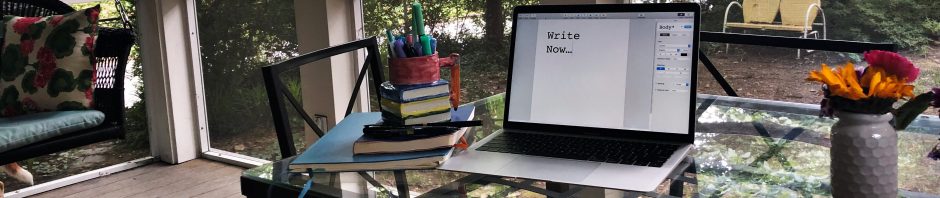
 This is the view from my hammock. When I look up from my book, this is what I see. The word on the street is that I read a lot. True.
The word on the street is that I don’t like to teach math. Not true. I love patterns; I love helping people find the perfect solution; I love games. I love finding multiple avenues to solve one problem. I love showing how numbers, like words, can tell a story. I love playing a part in building math confidence. Parents tell me that they’ve heard on the playground that I don’t like to teach to math. It simply isn’t true.
The word on the street is that I love to teach children to write. This really is true. On the first day of school I gently lead my students into a vale of voice and meaning through story. I explain that when we tell stories we are “writing in the air.” When we write down our stories, we are putting our voice on paper. I loved hearing the “Quick Write” notebooks crack open for the first time last week as I turned on our writing music. Did they all punctuate? Did their ideas hang together? Was their spelling correct? No. One of the joys of being a third grade teacher is watching it come together. And it will. These children are going to write well and love writing. That is the word on the street. And it’s true.


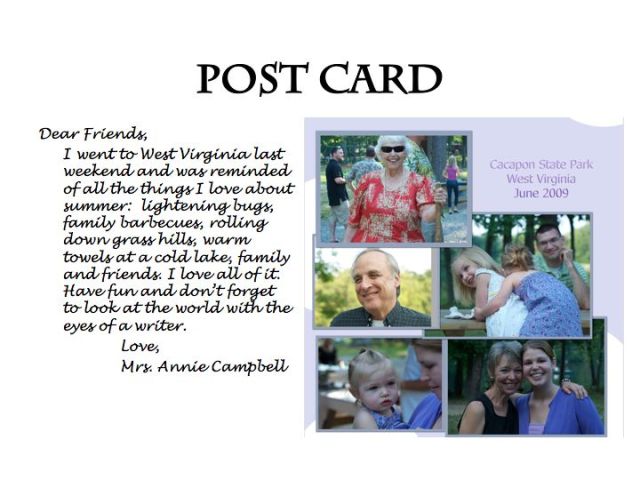
 September is a blind date for any teacher. You are matched with 22 students, and 22 students are matched with you. “Are they your favorite class yet?” People who know me well ask this question every September and laugh. They know. They know that in September I still miss the last class. And their parents. And they know I’m about to fall hard for this new class. Again. It happens every September. It will happen next September, too.
 Every day, before lunch, we read a little of Charlotte’s Web. Each child has his or her own copy. A cup holds their names on popsicle sticks. I read aloud. The room settles. I draw a name from the cup, and that child takes a turn. I read some more and pick another name… As we read, we explore what E.B. White teaches us about writing.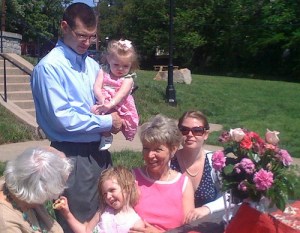
 The bongos played. Parents came and so did Emily Dickinson and Robert Frost and Christopher Marlowe and Langston Hughes and Paul Laurence Dunbar, and so many others. Word by word, poet by poet, poetry came to life. Word by word, poetry was written in the air in the same way that sparklers write in the night. I loved the private ownership of a poem held ready in the heart of a child walking forward toward the stool. I loved the celebration of poetry, of students, of parents and children, of writing, of third grade. I loved watching parents and children moving around the room, cool jazz in the background, asking one another, “Do you have a poem in your pocket?” Again and again, crumpled paper was pulled out, unfolded, and shared.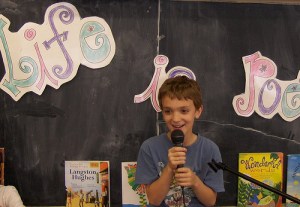


 Write Now. Write Here.